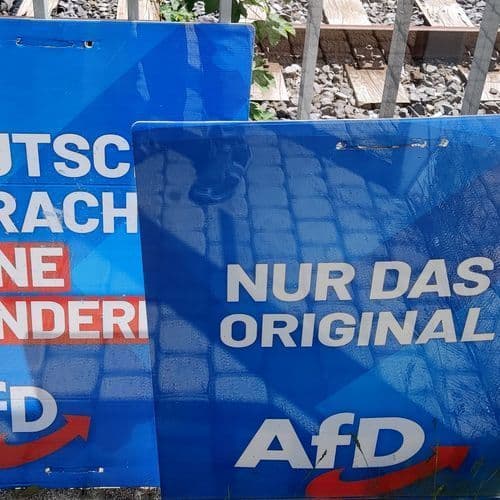
Russia divide resurfaces as AfD leads in Saxony-Anhalt
The far-right party’s support for ending aid to Ukraine and restoring energy ties with Moscow is resonating as eastern voters revisit old Russia ties.
- Opinion polls suggest the far-right AfD could secure its first state-level victory in Saxony-Anhalt on Sunday, reigniting intense debate over Germany's Russia policy amid Berlin's accusations of espionage and infrastructure attacks.
- Decades of Soviet troops stationed in towns like Naumburg created familiarity with Russia, leading many residents to view Moscow not as a natural enemy but as a potential business partner.
- Economic grievances fuel this divide; unemployment in Saxony-Anhalt peaked at 22% in 2003, and the 2026 Competitiveness Report shows East Germans hold only a quarter of West Germans' wealth.
- The AfD demands an end to support for Ukraine and renewed energy agreements with Moscow, while Chancellor Friedrich Merz's coalition accuses the party of favoring Russian President Vladimir Putin.
- Naumburg native Stefan Zimmerer warns that labeling East Germans as 'Putin's friends' deepens resentment, as voters feel national politics ignores their concerns regarding regional prosperity and stability.
15 Articles
15 Articles

The right-wing nationalist AfD could win its own majority in a German state, Saxony-Anhalt, for the first time this weekend. So Germany is holding its breath. And Vladimir Putin is keeping his fingers crossed.

After the Leipzig attack, the Kremlin turns the tables and accuses Berlin of escalation. And his friends in Germany are playing with the lubricating piece. A comment by Georg Anastasiadis.

Sunday the far right AfD party should win in Saxony-Anhalt and might be able to rule, for the first time

For some perpetrators, an explosive attack is not an escalation, but merely a reaction with sanctions.

According to an Ipsos survey, many in Germany are concerned about the strength of the AfD. The majority support the fire wall, with views on the left.


Russia divide resurfaces as AfD leads in Saxony-Anhalt
For Rainer Huppenbauer, as for many in eastern Germany, decades of living with Soviet troops led to a familiarity that has shaped their attitudes to a fault line that has divided German politics since Russia's invasion of Ukraine.
Coverage Details
Bias Distribution
- 45% of the sources are Center


Factuality
To view factuality data please Upgrade to Premium