Published • loading... • Updated
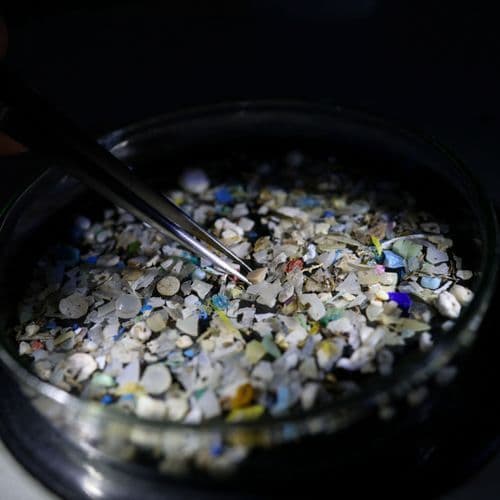
The Great Pacific Garbage Patch may now have so much plastic, it’s changing the color of the ocean
Researchers found a statistically significant cyan brightening in satellite data that matches microplastic optical signatures predicted in lab tests and simulations.
- On Thursday, University of Bergen scientists reported that increasing microplastic concentrations likely caused a 20-year color shift in the Great Pacific Garbage Patch, with satellite data showing significant brightening in blue and green wavelengths creating a cyan tint.
- The Great Pacific Garbage Patch spans twice the size of Texas and holds 1.8 trillion plastic pieces, yet the 'missing plastic paradox' makes tracking pollution difficult since only around 250,000 tons float at the surface despite 13 million metric tons entering oceans annually.
- Simulations confirmed that microplastics scatter and absorb light differently than natural ocean components, creating unique optical signatures consistent with the cyan brightening observed in satellite datasets spanning 2002 to 2022.
- Marine biology professor Richard Thompson at the University of Plymouth noted that "if we can detect change remotely from satellites it will be faster and less costly than counting debris piece by piece."
- If validated, this analysis could be applied to other oceanic regions with high microplastic concentrations to help experts understand the global scale of marine pollution, though direct measurements remain necessary for confirmation.
Insights by Ground AI
74 Articles
74 Articles


Microplastics change the colour of the sea near the Great Pacific Garbage Patch
·London, United Kingdom

Some Parts of the Ocean Are Turning a Weird Shade of Blue-Green
·Arlington, United States


·Munich, Germany

Coverage Details
Total News Sources74
Leaning Left11Leaning Right8Center20Last UpdatedBias Distribution51% Center
Bias Distribution
- 51% of the sources are Center
51% Center
L 28%
C 51%
R 21%


Factuality
To view factuality data please Upgrade to Premium