Irish Early Risers to Be Rewarded with Look at Lunar Eclipse
The Moon will be about 94% covered at peak, and viewers can watch safely without special glasses, astronomers said.
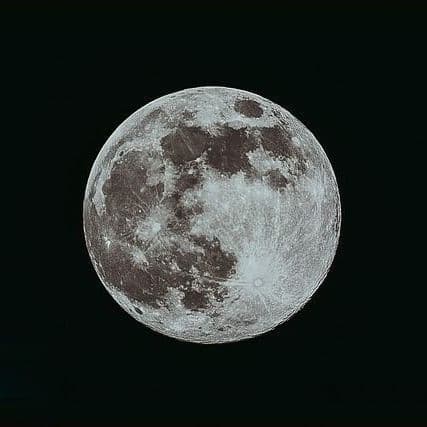
- Skywatchers across Baltimore are in for a celestial treat on Thursday, August 27, as a deep partial lunar eclipse unfolds overhead, with Earth's shadow covering 93 per cent of the Moon.
- Unlike the recent solar eclipse on August 12, this lunar event is completely safe to view with the naked eye as the Moon moves through Earth's shadow, appearing darker due to filtered sunlight.
- Elaina Hyde, director of the Allan I. Carswell Observatory York University, noted that while it is a "naked eye object," observers can use binoculars or a telescope to capture clear images of the lunar surface.
- The visible portion of the eclipse begins at 10:33 p.m. ET on Thursday, August 27, and concludes at 1:52 a.m. on Friday, August 28, with experts recommending an uninterrupted view toward the western horizon.
- This celestial display follows recent astronomical activity including the Perseids and the August 12 solar eclipse; Baltimore residents will have to wait until June 26, 2029, for the city's next total lunar eclipse, called a "Blood Moon.
20 Articles
20 Articles

A partial lunar eclipse will cover 96% of the moon on Thursday night, August 27, visible without special equipment from Baltimore.

Partial lunar eclipse will peak Thursday night
COACHELLA VALLEY, Calif. (KESQ) - Skywatchers have a reason to look up Thursday night as a partial lunar eclipse will be visible across the Coachella Valley. The eclipse will peak around 9:12 p.m. Thursday, Aug. 27, with the moon visible toward the east and southeast. During a partial lunar eclipse, Earth’s shadow covers only part The post Partial lunar eclipse will peak Thursday night appeared first on KESQ.


A partial lunar eclipse will occur here early Friday morning.

The sky is back to the stage of an astronomical phenomenon this month. After the solar eclipse that marked the beginning of August, it is now time for the Moon to gain prominence. The good news is that no equipment will be needed to observe the phenomenon.

After the solar eclipse of August 12, a spectacular new phenomenon will occur in the sky, when nearly 93% of the moon's diameter will be plunged into the shadow of the Earth.
Coverage Details
Bias Distribution
- 64% of the sources are Center


Factuality
To view factuality data please Upgrade to Premium