Meteorologist Warns ‘Super El Niño’ Has Become ‘Mega El Niño’
The U.S. National Oceanic and Atmospheric Administration puts the anomalies at 4°C to 6°C and rates the event very strong, with no 'mega' category.
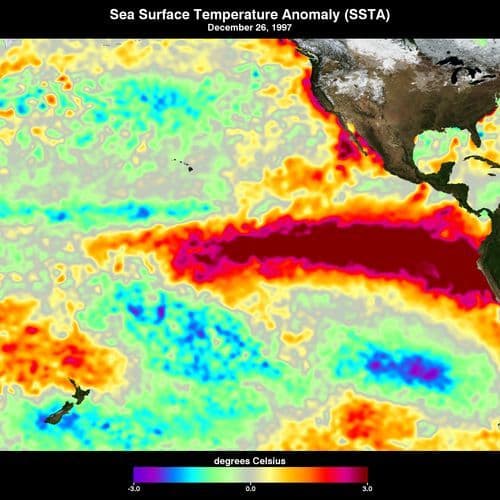
- Scientists warned that the powerful climate pattern known as a 'Mega Niño' is continuing to intensify, with maps suggesting Pacific temperatures have rocketed to 10°C above normal.
- Niño is part of a naturally occurring climate cycle called the Southern Oscillation, or ENSO, that moves between hot and cold periods every two to seven years, disrupting atmospheric circulation.
- US meteorologist Ryan Maue identified a '+10°C sea surface temperature anomaly near Galapagos and off coast of Peru,' calling it 'a mega Niño' as data reveals waters running several degrees above average.
- The phenomenon disrupts nutrient-rich waters, causing breeding failures and mass starvation among wildlife, while The Philippines has already reported drought conditions as extreme heat threatens water supplies.
- UN Secretary-General António Guterres warned 'we have entered a new age of climate extremes,' as scientists expect the event to peak around the end of 2026 with effects continuing into 2027.
48 Articles
48 Articles

From 'Super' to 'Godzilla' to 'Mega': Just how monstrous is this year's El Niño?
From "Super" to "Godzilla" to "Mega," the names for this year's powerful El Niño keep getting bigger. But scientists say there's no official upgrade. Here's what the dramatic labels mean, how exceptional this event really is and what Canadians can expect this winter.

The organization Climate Impact Lab projects 920,000 deaths worldwide linked to extreme heat between June 2026 and April 2027, when the Superchild is in full manifestation
 antena3.ro
 romaniatv.net
The intensified El Nino phenomenon has caused an unprecedented increase in temperature in certain parts of the Pacific Ocean, which could intensify the effects felt worldwide. A meteorologist...


The Super El Niño phenomenon worries scientists about the extreme warming of the Pacific Ocean and its possible effects on the global climate during 2027.
Coverage Details
Bias Distribution
- 56% of the sources lean Right


Factuality
To view factuality data please Upgrade to Premium