New forecast shows how El Niño will shape winter weather in US
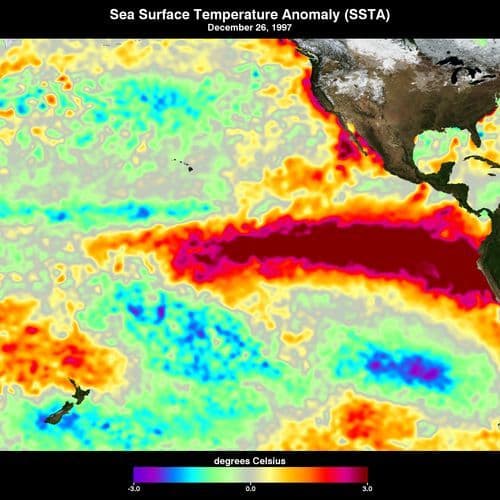
- Federal forecasters released an updated winter weather forecast on Thursday, November 19, with National Weather Service meteorologist Brad Pugh noting El Nino will be "the major influence on temperatures and precipitation this winter through next spring."
- El Nino, a natural climate phenomenon where Pacific Ocean surface waters become unusually warm, is forecast to drive weather extremes through January-February-March 2027, with strong conditions persisting beyond December across North America.
- The northern tier from Northwest to Northeast will see above-average temperatures, particularly in Washington state, the Great Lakes and New England, while the Southeast and Florida expect "near normal" temperatures; above-average precipitation will affect the West and East Coasts and entire southern tier.
- Pugh told USA TODAY that flooding risks remain elevated: "We've already seen flooding rainfall affect the Florida Peninsula this month and there is an increased risk of additional flooding rainfall this winter with the strong to very strong El Nino," with southern California, Florida and the Southeast coast particularly vulnerable.
- Weather service forecaster Dan Collins reported an unusual November sudden stratospheric warming displaced the polar vortex over the North Pole, while meteorologist Laura Ciasto told USA TODAY forecasts show a negative Arctic Oscillation shift approaching late November that could bring cold to the eastern U.S.
34 Articles
34 Articles


This winter in Korea is expected to be less cold than average, but with significant fluctuations and heavy rain or snow. On the 23rd, the Korea Meteorological Administration (KMA) released its "3-Month Outlook," stating, "This winter (December to February 2027), temperatures and precipitation will be higher than average, but temperature fluctuations will be large." The KMA, including the Korea Meteorological Administration,

(Seoul = Yonhap News) Reporter Lee Jae-young = This winter is forecast to be warm due to the influence of the 'strongest El Niño.' Heavy snow and rain are also expected.

The Korea Meteorological Administration forecasted that this winter will be generally warmer than average due to the influence of a strong El Niño. However, temporary, sudden cold waves may occur due to sudden stratospheric warming, and heavy precipitation is expected, particularly in western regions, due to cold air passing over the Yellow Sea.


Environment Canada forecasts above normal temperatures for this winter in Toronto and for much of southern Ontario.
Coverage Details
Bias Distribution
- 62% of the sources lean Left


Factuality
To view factuality data please Upgrade to Premium