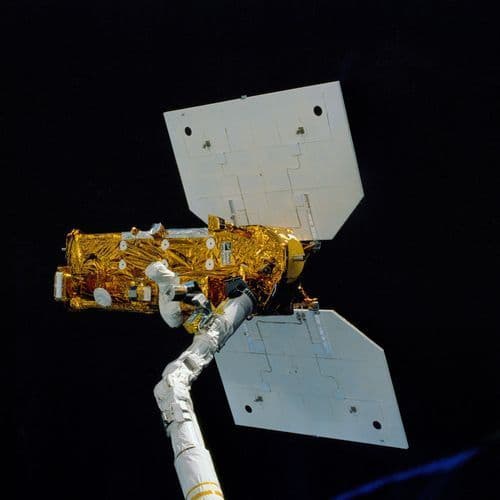
Another Satellite Breakup Raises Concerns About Space Junk
LeoLabs said the breakup added tens of fragments to a crowded orbital region where debris can linger for decades.
- On Monday, October 5, 2026, LeoLabs detected the breakup of the inactive Soviet-era Meteor 2-7 satellite as it passed over Western Australia, generating tens of new debris fragments in low-Earth orbit.
- Launched in 1981, Meteor 2-7 had been inactive for decades before breaking apart at an altitude of 855 km, where experts suspect an internal energetic source caused the fragmentation event.
- Objects in low-Earth orbit travel at roughly 17,500 mph, meaning even small fragments can destroy active spacecraft. NASA scientists Donald Kessler and Burton Cour-Palais warned that such fragmentation events could trigger the Kessler Syndrome.
- LeoLabs reported this breakup is the latest in a series of debris-generating events detected over the past six months, including anomalies involving SpaceX Starlink and Chinese Long March rockets.
- With hundreds of thousands of debris pieces already in orbit, growing congestion increases collision risks for future space operations as fragments remain in the dense environment for decades or centuries.
14 Articles
14 Articles
 The Independent
 The Independent (US)
A Soviet satellite just broke apart and is threatening other spacecraft
Meteor 2-7 has been inactive for decades and now poses space debris risk

Another satellite breakup raises concerns about space junk
An inactive Soviet weather satellite has broken apart above Earth. The satellite breakup has added tens of debris fragments to an already crowded low-Earth orbit. The post Another satellite breakup raises concerns about space junk first appeared on EarthSky.

A satellite put into orbit by the late USSR has just disintegrated into orbit around the Earth, and it's not the only one these days.

Space debris is on the loose, more and more satellites are falling to pieces above Earth - The debris accumulating in space could start a chain reaction.

In the near-Earth orbit, old space missiles increasingly disintegrate unexpectedly into debris clouds and thereby endanger functioning satellites. This series of uncontrolled incidents raises acute questions about the safety of the orbital infrastructure. read more on t3n.de

A satellite launched in 1981 is breaking apart again. This is the second such incident in orbit in recent months.
Coverage Details
Bias Distribution
- 67% of the sources lean Left


Factuality
To view factuality data please Upgrade to Premium