Published • loading... • Updated
Human Brain Cells Learn to Play Doom on Biological Computer
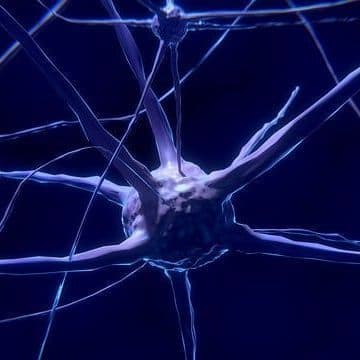
Cortical Labs' CL1 system uses 200,000 living human neurons to adaptively play Doom, showcasing synthetic biological intelligence and real-time learning in a commercial neural computing platform.
- In a YouTube announcement, Cortical Labs said it demonstrated living human neurons playing Freedoom on the CL1 system and posted the demo and open-source code to YouTube and GitHub.
- Building on neuron‑Pong demonstrations years ago with clusters of 800,000 to one million cells, Cortical Labs chose Doom as a practical, symbolic benchmark, completing it far faster than the 18 months for Pong.
- Using a mapped stimulus‑response loop, the CL1 maps on‑screen elements to electrical stimuli that provoke neuronal spikes in 200,000 human neurons on a 59-electrode array managed by biOS, with Sean Cole training the neurons via Cortical Cloud and Python API in less than a week.
- While performance trails humans, the system learns faster than traditional silicon-based machine learning and can improve with newer algorithms, experts say.
- Under current lab conditions, the CL1 ships as a desktop or 30‑unit rack module, with each module costing around 1,000 dollars and consuming 850 to 1,000 watts per rack.
Insights by Ground AI
59 Articles
59 Articles

The computer created by Cortical Labs demonstrates the almost infinite capabilities of this type of neural networks

 Zero Hedge
+2 Reposted by 2 other sources


Scientists Train Lab-Grown Human Brain Cells To Play Doom
ZeroHedge - On a long enough timeline, the survival rate for everyone drops to zero
·United States
Read Full Article
Scientists Taught a Clump of Human Brain Cells to Play Doom
The internet has a long, rich history of getting the classic video game Doom to play on a wide variety of things, from pregnancy tests to a classic TI-84+ calculator that itself was powered by potatoes. It’s an engineering challenge where people get to demonstrate they can accomplish incredibly stupid things as long as they […]
·New York, United States
Read Full Article

Coverage Details
Total News Sources59
Leaning Left7Leaning Right9Center8Last UpdatedBias Distribution38% Right
Bias Distribution
- 38% of the sources lean Right
38% Right
L 29%
C 33%
R 38%


Factuality
To view factuality data please Upgrade to Premium