Cassini Data Show Enceladus Ice Grains Sort Salts and Organics
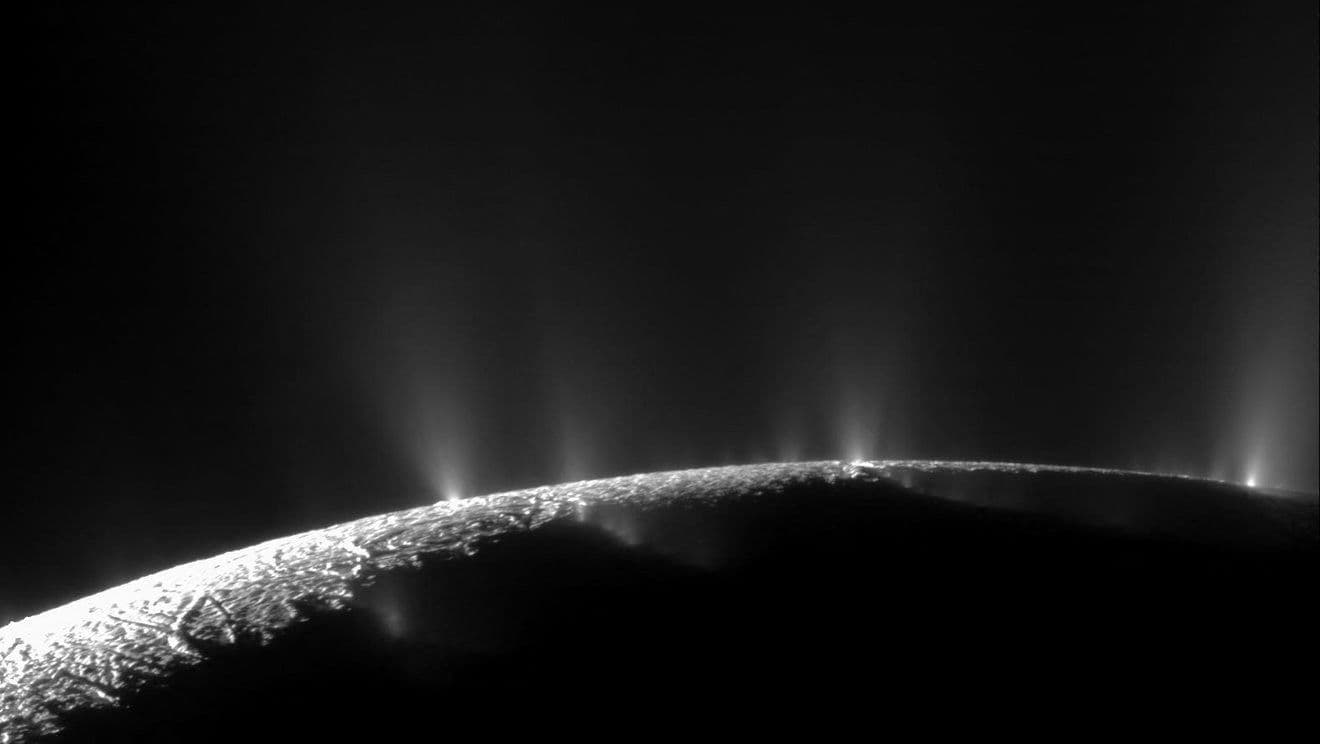
NASA/JPL-Caltech/Space Science I/Reuters
Source Analysis




What Happened
Key Implications
What Happened
Key Implications
Timeline
September 25, 2026
Implications for life search: Scientists noted that Enceladus effectively prepares samples for analysis by segregating and concentrating ocean salts into particles, a development Postberg called 'great news' for the search for life and which provides better compositional statistics than rare plume traverses.
September 25, 2026
Slow freezing causes segregation: The team found that slow freezing (below ~20 K per minute) in relatively large droplets (tens to hundreds of micrometers) causes different salts to crystallize separately, concentrating oceanic constituents into individual ice particles; lab freeze experiments and thermodynamic modeling supported this mechanism.
September 25, 2026
Analysis of nearly 1,000 grains: Researchers examined spectral data from about 961 Type 3 ice grains (nearly 1,000 measurements) and, rather than a uniform salty composition, identified at least five distinct chemical subtypes dominated by sodium chloride, carbonates/bicarbonates, phosphates, hydroxides, or potassium salts.
Summary by Ground AI
Sources
See All 41A varied selection of sources chosen by Ground to reflect the diversity of this story’s coverage.
Most Written About
The stories getting the most coverage from the last 24 hours







Source Analysis
Timeline
September 25, 2026
Implications for life search: Scientists noted that Enceladus effectively prepares samples for analysis by segregating and concentrating ocean salts into particles, a development Postberg called 'great news' for the search for life and which provides better compositional statistics than rare plume traverses.
September 25, 2026
Slow freezing causes segregation: The team found that slow freezing (below ~20 K per minute) in relatively large droplets (tens to hundreds of micrometers) causes different salts to crystallize separately, concentrating oceanic constituents into individual ice particles; lab freeze experiments and thermodynamic modeling supported this mechanism.
September 25, 2026
Analysis of nearly 1,000 grains: Researchers examined spectral data from about 961 Type 3 ice grains (nearly 1,000 measurements) and, rather than a uniform salty composition, identified at least five distinct chemical subtypes dominated by sodium chloride, carbonates/bicarbonates, phosphates, hydroxides, or potassium salts.


