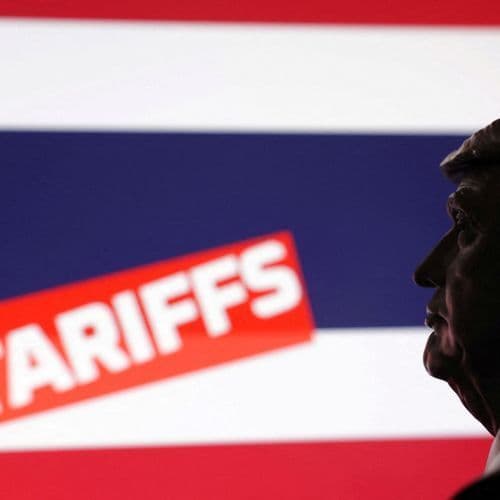
Philippines Optimistic on Lifting 12.5% US Tariff
The administration considers tariffs on forced-labor goods, a unilateral trade tool aimed at reshoring industry and challenging global trade norms.
6 Articles
6 Articles

Philippines optimistic on lifting 12.5% US tariff
The Philippines remains optimistic about the possible removal of the 12.5-percent tariff imposed by the United States (US) on its imports as the Trump administration reviews the country’s efforts to crack down on forced labor imports.Department of Trade and Industry (DTI) Undersecretary Ceferino Rodolfo said the government is in close coordination with the Office of the US Trade Representative (USTR) on its ongoing review of the tariffs imposed …

Trade Liberalisation Never Lifted All Boats
President Trump has blamed trade liberalisation advocated by globalists for US deindustrialisation. Instead, his own weaponisation of economic policies, instruments and institutions purport to ‘make America great again’ (MAGA). Trump 1.0 claimed to do so by ‘reshoring’ industries that had relocated abroad. Trump 2.0 uses more threats to secure investments, markets and other economic advantages […]

From fresh US tariffs to growth downgrades and CWG medal tally, top global news in five charts
The US has reintroduced tariffs, this time targeting 60 countries over forced labour concerns—India included. The West Asia war has triggered a downgrade in the International Monetary Fund's 2026 GDP outlook, and the Commonwealth Games just wrapped up one of its leanest editions in recent decades.

New 50% U.S. tariffs add pressure on retailers as trade uncertainty disrupts pricing, inventory and growth: DOSS Report
A new DOSS report finds the latest 50% U.S. tariffs on Canadian goods are intensifying pressure on retailers, forcing companies to rethink pricing, inventory management and supply chains while delaying long-term growth plans. The post New 50% U.S. tariffs add pressure on retailers as trade uncertainty disrupts pricing, inventory and growth: DOSS Report appeared first on Retail Insider.


Following the judicial setback dictated by the Supreme Court on February 20—which limited the use of the International Emergency Economic Powers Act (IEEPA) to impose "reciprocal tariffs," the U.S. Executive activated alternative legal avenues to maintain its policy of protecting domestic production and reducing the commercial dependence of external manufacturers. Since July 24, the U.S. Administration has applied a new set of tariffs of between…
Coverage Details
Bias Distribution
- 67% of the sources lean Left


Factuality
To view factuality data please Upgrade to Premium