Published • loading... • Updated
El Niño Is Just Getting Started. New Effects Expected Soon
The climate pattern is strengthening as warm Pacific waters raise the odds of heavy rain and snow across parts of the United States, NOAA said.
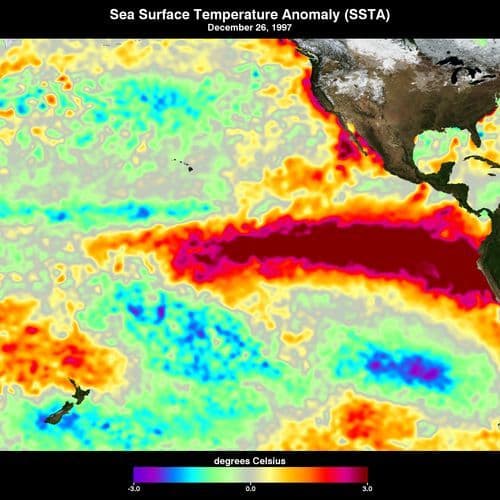
- On Tuesday, the National Oceanic and Atmospheric Administration confirmed the 'Super El Niño' has reached 'very strong' levels, with ocean temperatures in the equatorial Pacific running 2.5 degrees Celsius above average.
- The event developed as weakened trade winds allowed warm Pacific waters to shift eastward since early 2026, reaching levels NOAA forecasters classify as a 'historic event exceeding previous El Niños dating back to 1950.'
- Sea surface temperatures have risen to +3.3°C, fueling heavy rain and coastal flooding across the U.S. South and West; researchers warn the event could cause as many as 451,000 excess deaths through February 2027.
- The North American Electric Reliability Corporation warned power grid operators on Monday that the strengthening El Niño poses a threat to U.S. power systems this winter, urging operators to ensure systems are 'properly winterized.'
- Forecasters expect the event to persist through March 2027, though impacts remain uncertain. 'The search for the 'typical' El Niño is very elusive,' said Josh Willis, project scientist at NASA's Jet Propulsion Laboratory.
Insights by Ground AI
Podcasts & Opinions
218 Articles
218 Articles


The arctic polar vortex, a belt of violent winds that usually limits the glacial air above the North Pole, has become exceptionally weak early this year, and has found meteorologists.

El Niño warning: 16 US States at increased risk of flooding this winter
Meteorologists warn that a robust El Niño, expected to possibly persist until early 2027, will bring about significant weather variations across the country. Warmer northern climates will contrast sharply with increased precipitation in the south, especially affecting the southeastern states and California. Meanwhile, the Pacific Northwest may brace for drier, milder conditions, raising concerns about dwindling water supplies and elevated wildfi…
·India
Read Full Article


Coverage Details
Total News Sources218
Leaning Left25Leaning Right14Center70Last UpdatedBias Distribution64% Center
Bias Distribution
- 64% of the sources are Center
64% Center
L 23%
C 64%
13%


Factuality
To view factuality data please Upgrade to Premium