Super El Niño Declared: What that Means for Central Mississippi
The climate pattern could drive drought, flooding and heat stress worldwide, with NOAA saying the chance of a historic event remains above 79%.
- On Thursday, November 12, the Climate Prediction Center officially designated the 2026 El Niño as a "Super El Niño," following exceptionally warm equatorial Pacific ocean temperatures.
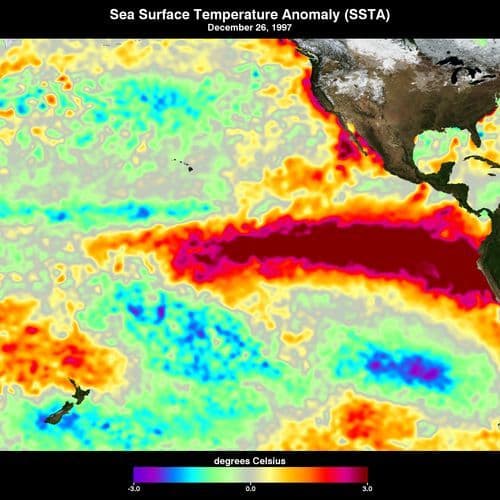
- Forecasters define a "Super El Niño" as a climate pattern where ocean temperatures remain at least 2 degrees Celsius—or 3.6 degrees Fahrenheit—above average for more than 3 months.
- Using 35 years of satellite observations, NASA scientists can now compare the rapidly developing 2026 El Niño with the historic 1997-98 event, revealing striking similarities.
- An active southern storm track could bring frequent rain, flooding, and severe thunderstorms to the southern Plains and Southeast, AccuWeather experts warn, as rivers potentially reach flood levels.
- The current El Niño is projected to peak during the November-January period, according to National Weather Service physical scientist Michelle L'Heureux, who noted the outlook allows for La Niña development in 2027.
64 Articles
64 Articles


NASA scientists find similarities between the El Niño phenomena of 2026 and 1997, these are their conclusions


Researchers warn that powerful El Niño could trigger global food and health crises
A potentially historic El Niño weather event could trigger far-reaching consequences for global food security and public health, according to researchers writing in the journal Nature.


El Niño, a climate phenomenon that can influence rains and temperatures in different regions of the planet, must reach its maximum intensity between November of this year and January of 2027. The forecast, released by the National Institute of Meteorology (Inmet) based on data from the American agency NOAA, indicates that the warming of the waters of the Equatorial Pacific Ocean will continue very intense in the coming months, before starting to…
Coverage Details
Bias Distribution
- 62% of the sources are Center


Factuality
To view factuality data please Upgrade to Premium