Super El Niño declared: What that means for Central Mississippi
- On Thursday, November 12, the Climate Prediction Center officially designated the 2026 El Niño as a "Super El Niño," following exceptionally warm equatorial Pacific ocean temperatures.
- Forecasters define a "Super El Niño" as a climate pattern where ocean temperatures remain at least 2 degrees Celsius—or 3.6 degrees Fahrenheit—above average for more than 3 months.
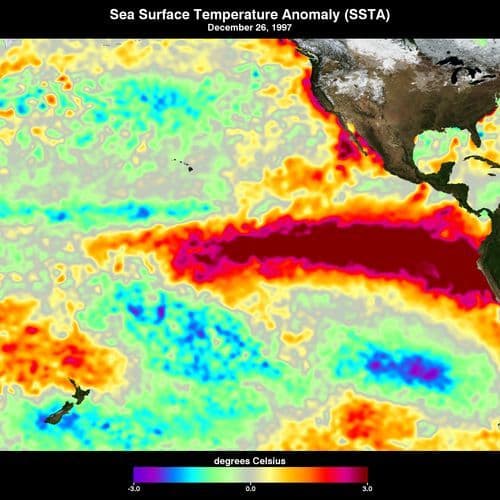
- Using 35 years of satellite observations, NASA scientists can now compare the rapidly developing 2026 El Niño with the historic 1997-98 event, revealing striking similarities.
- An active southern storm track could bring frequent rain, flooding, and severe thunderstorms to the southern Plains and Southeast, AccuWeather experts warn, as rivers potentially reach flood levels.
- The current El Niño is projected to peak during the November-January period, according to National Weather Service physical scientist Michelle L'Heureux, who noted the outlook allows for La Niña development in 2027.
29 Articles
29 Articles


The El Niño climate phenomenon has reached an extraordinary strength, which is called a "super El Niño". This is according to the assessment of the US National Oceanic and Atmospheric Administration (NOAA). Meteorologists expect further intensification and do not rule out that the current El Niño will be the strongest in the history of measurements.

NASA is constantly monitoring the El Niño phenomenon and has discovered several important similarities and some differences with similarly strong weather patterns from previous years, Science Alert said.

Meteorologists warn that 30 years ago there was a similar El Niño phenomenon and Spain had several intense episodes of snow
 Science Daily
 ecotopical.com
NASA warns this year's Monster El Niño could be even bigger than legendary 1997 event
NASA scientists warn that the rapidly intensifying 2026 El Niño could surpass the historic 1997-98 event, which triggered devastating weather extremes around the world. Satellite data reveal striking similarities between the two, raising the possibility of major rainfall and flooding this winter, although the exact impacts remain uncertain.

El Niño still growing stronger. Here's what could happen next
Coverage Details
Bias Distribution
- 78% of the sources are Center


Factuality
To view factuality data please Upgrade to Premium