Microplastics Fall Across Rural Switzerland, Adding over 200 Tons Yearly to Land and Water
- On Thursday, Swiss research institutes Empa, Eawag, and Agroscope reported that approximately 219 tonnes of microplastics deposit annually across Switzerland via atmospheric deposition.
- Supported by the Federal Office for the Environment , researchers collected samples at five locations over one year, including sites in Zurich and the Jura, to systematically track airborne microplastic pollution.
- Polyethylene terephthalate was the most frequent plastic identified at 31%, followed by polyethylene at 26% and polypropylene at 21%, with approximately 78 tonnes settling directly on agricultural land annually.
- Although microplastics comprise only 0.02% to 0.12% of total airborne particle mass, Empa researchers recommended avoiding littering, using plastics only where necessary, and closing material cycles to reduce accumulation.
- Despite their low mass proportion, microplastic particles accumulate considerably over large areas and barely degrade in the environment, yet the full consequences for ecosystems and human health remain largely unclear.
19 Articles
19 Articles

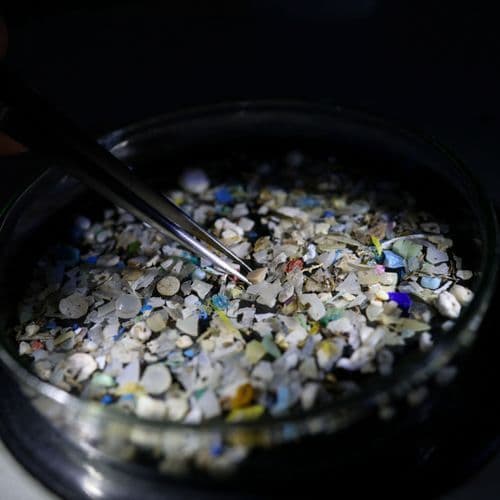
Over 200 tons of microplastics fall from the air to the ground in Switzerland each year. Scientists investigated where these tiny plastic particles most often end up. They found a disturbing amount of plastic in key food production areas.


Microplastics fall across rural Switzerland, adding over 200 tons yearly to land and water
Loose fibers from functional clothing, discarded PET bottles or abandoned packaging: When such plastic materials enter the environment, they often persist there for a long time. UV radiation, precipitation and ozone cause them to become brittle—and over time, mechanical forces break them down into increasingly smaller particles. Swirled up by the wind, they are carried farther through the atmosphere. Until now, it was unclear how much microplastic ends up back in Swiss soil and water bodies through this process.

These small particles have become a form of widespread and persistent contamination.

A study has revealed that 96% of the microplastics flowing into the ocean via rivers worldwide are concentrated in developing countries, such as Southeast Asia. Heavy rainfall rapidly amplifies this microplastic outflow, suggesting that as extreme weather events become more frequent due to climate change, microplastic pollution will become even more severe.

Transported by air, particles of microplastics come mainly from PET bottles, textiles and packaging. About 40% end up on agricultural land, in lakes and rivers, according to a first systematic research Transported by air, 219 tons of microplastics arrive each year in Swiss soil and waters, according to a study by l'Empa, l'Eawag and d'Agroscope. About 40% of these particles end up on agricultural land, in lakes and rivers.For the first time, a t…

Coverage Details
Bias Distribution
- 75% of the sources lean Left


Factuality
To view factuality data please Upgrade to Premium