NASA space telescope plunges to Earth after two decades studying cosmic explosions
NASA said most of the 3,200-pound observatory burned up, and officials had put the chance of harming anyone on the ground at 1 in 2,100.
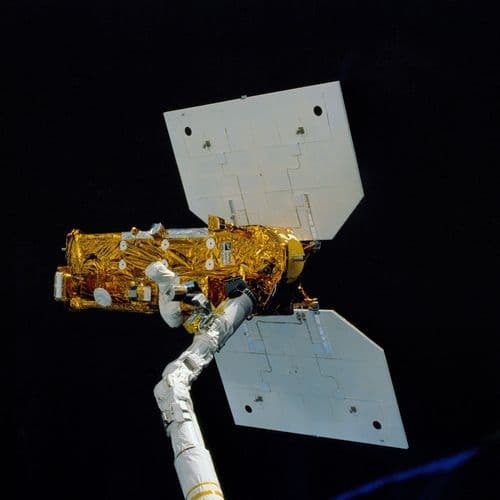
- On Wednesday, the 3,200-pound Neil Gehrels Swift Observatory reentered Earth's atmosphere over northern Sumatra, ending its 22-year investigation of cosmic explosions.
- NASA awarded Katalyst Space a $30 million contract to extend the telescope's life, but their LINK robotic spacecraft suffered propulsion failures following its July launch.
- Designed for a two-year mission, the observatory remained productive for 22 years, observing more than 2,000 gamma-ray bursts, said Shawn Domagal-Goldman, director of NASA's Astrophysics Division.
- Science mission chief Nicky Fox stated NASA is gauging industry interest for a similar rescue mission for the Hubble Space Telescope, exploring upgrade options.
- At least three large objects, including dead satellites or spent rocket bodies, fall back to Earth every day on average, a trend expected to rise as megaconstellations grow.
54 Articles
54 Articles

NASA's Sinking Telescope Has Fallen to Earth
One of NASA's first space telescopes plunged to Earth on Wednesday, ending its 22-year investigation of the universe's biggest explosions. The US Space Force confirmed the Swift Observatory's reentry near Indonesia, reports the AP. It was not immediately known how much of the 1.5-ton spacecraft burned up in the...

 Reformatorisch Dagblad


The American space telescope Swift perished in the atmosphere on Wednesday. It ended as a fireball. It is not yet known whether debris survived the demise and impacted Earth.

Illustration shows NASA's Neil Gehrels Swift Space Telescope in Earth's orbit. NASA/Goddard Space Flight Center Conceptual Image Lab NASA's Neil Gehrels Swift Space Telescope re-entered Earth's atmosphere on Wednesday (4), after nearly 22 years in space. Confirmation was released by NASA on the afternoon of Wednesday (4), in an update published on the official mission blog.


Before the fall, the agency had listed 1 out of 2,100 the probability that the remains would cause damage to any person.
Coverage Details
Bias Distribution
- 38% of the sources lean Left, 37% of the sources are Center


Factuality
To view factuality data please Upgrade to Premium