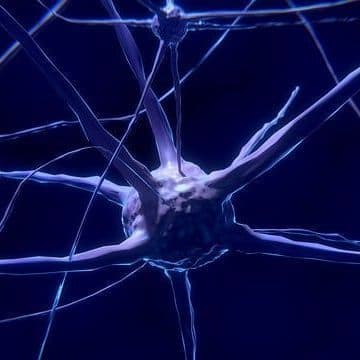
Scientists Create Living Mice with Half-Human Brains
The mice carried millions of human brain cells that connected with mouse tissue and showed human-like sensitivity to oxygen loss, researchers said.
- Stanford University scientists created mice with human brain tissue by genetically engineering rodents to lack a cortex. The implanted human neurons multiplied to roughly four million cells and successfully connected with mouse brain tissue.
- For two decades, researchers have sought models of human brains outside the body to study neurocognitive disorders. Sergiu Paca, a Stanford University professor of psychiatry, told NPR the work provides access to human brain functions otherwise difficult to study.
- The human tissue contained specialized von Economo neurons, found only in highly social animals like humans and elephants. When researchers deprived newborn mice of oxygen at birth, unlike typical mice, they exhibited brain damage—a human-like response.
- This groundbreaking feat could provide a new avenue for understanding and treating neurocognitive disorders. Sergiu told the NYT the work is an ideal example of studying devastating disorders like frontotemporal dementia.
- Nita Farahany, professor of law and philosophy at Duke Law, noted researchers terminated experiments at six months before brain cells could form further connections. Farhany told NPR they aim to prevent markers of consciousness from emerging.
18 Articles
18 Articles

Scientists create living mice with half-human brains
Scientists at Stanford have grown human brain tissue inside mice, and in some of the animals, this tissue now accounts for half the brain by volume. The point of the experiment published in Nature is to study disorders such as schizophrenia, epilepsy, cerebral palsy, intellectual disability, and rare dementias that have proven almost impossible to […] Read the original article here: Scientists create living mice with half-human brains


Scientists Create Mice With Brains That Are Partly Human
Scientists have bioengineered mice which brains contain working human cells, but they stress that they're not "mice that think like humans." In a study published in Nature, Stanford University neuroscientists say they engineered mice to have almost no cerebral cortex of their own, leaving around half the volume of their...

In a bold scientific move, scientists have created mice with human-like neurons, raising questions about the ethics of scientific research. Scientists have created Frankenstein's mice with brains containing half a dozen human cells. These mice have millions of functional human neurons embedded in their brains. This groundbreaking achievement could provide a new avenue for understanding and treating neurological disorders… The article Frankenste…


Stanford scientists have created genetically modified mice with half their brains made up of human tissue. The researchers, led by Sergiu Pașca, first prevented the mice from developing the cerebral cortex and hippocampus, then injected millions of lab-grown human brain cells into the newborn animals. The human tissue connected to the mice's bloodstream, expanded, and within three […] The post Scientists injected human brain cells into mice and …
Coverage Details
Bias Distribution
- 43% of the sources lean Right


Factuality
To view factuality data please Upgrade to Premium