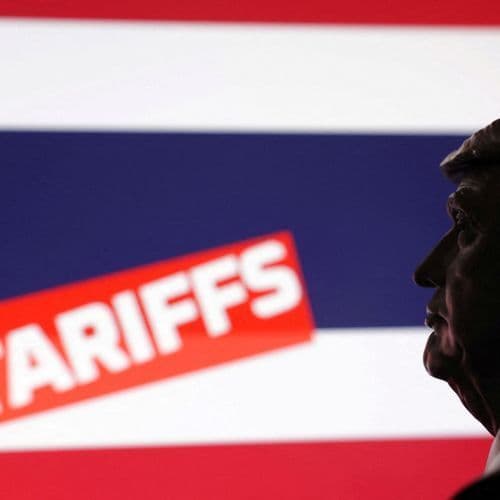
Untested in court, Trump’s new tariffs on Canada raise legal questions
The move triggered dollar-for-dollar retaliation from Ottawa and tested a rarely used tariff power that has never been challenged in court.
- On August 21, President Donald Trump invoked Section 338 of the Tariff Act of 1930 to impose a 50% tax on $20 billion worth of Canadian imports, marking the first presidential use of the Depression-era statute.
- The Trump administration cited Section 338 to sanction Canada for alleged discrimination against U.S. dairy, auto, and alcoholic beverage exports; the law is part of the notorious Smoot-Hawley Act, which sat unused since the Great Depression.
- Legal scholars Peter Harrell and Jennifer Hillman argue the administration failed to calculate actual damages from alleged discrimination, while Liberty Justice Center CEO Sara Albrecht suggests newer trade laws likely superseded the obscure statute.
- Dollar-for-Dollar retaliatory tariffs from Ottawa strained relations between the allies, and no plaintiffs have yet filed a formal lawsuit challenging the administration's reliance on the untested legislation.
- Albrecht noted a chance that both countries could resume talks broken off August 21 to reach a compromise, even as the administration continues collecting these import taxes.
20 Articles
20 Articles
 My Mother Lode


Untested in court, Trump’s new tariffs on Canada raise legal questions
WASHINGTON (AP) — In firing up a trade war with Canada, President Donald Trump turned to a 96-year-old statute so obscure that many trade lawyers didn’t even know it was still on the books. A week ago, Trump invoked Section 338 of the Tariff Act of 1930 to slap a 50% tax on $20 billion...
 Associated Press News


Untested in court, Trump's new tariffs on Canada raise legal questions
In firing up a trade war with Canada, President Donald Trump turned to a 96-year-old statute so obscure that many trade lawyers didn’t even know it was still on the books.


Trump Invokes Section 338 Tariffs on Canada, Drawing Fresh Legal Challenges
Section 338 tariffs on Canada, announced on 20 July 2026 and due to take effect from 22 August 2026, represent the Trump administration’s latest and most legally precarious use of executive tariff authority. The White House issued three proclamations invoking Section 338 of the Smoot-Hawley Tariff Act of 1930, imposing a 50% duty on approximately [...] The post Trump Invokes Section 338 Tariffs on Canada, Drawing Fresh Legal Challenges appeared …
Coverage Details
Bias Distribution
- 50% of the sources are Center


Factuality
To view factuality data please Upgrade to Premium