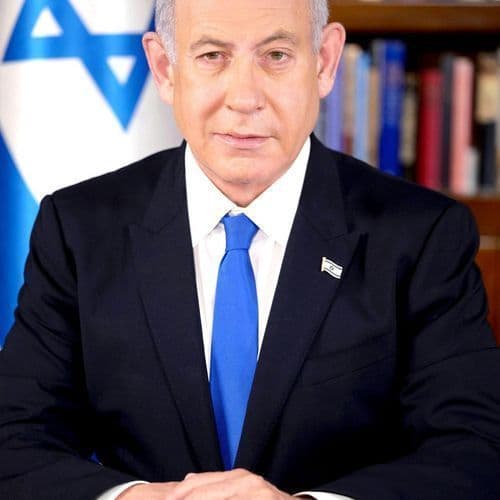
Arab parties extend a hand to try to topple Netanyahu but challenges remain
The parties say 19 seats give Arab voters leverage in coalition talks as rivals weigh whether to accept their support.
- Following the October 27, 2026, general election, Prime Minister Benjamin Netanyahu's bloc secured 53 seats while opposition leader Gadi Eisenkot's bloc won 48, leaving both far short of the 61-seat majority required to form a government.
- Arab-Led parties won a record 19 seats after turnout surged to about 80%, positioning them as kingmakers. This surge reflects widespread opposition to nationalist ministers including National Security Minister Itamar Ben-Gvir and Finance Minister Bezalel Smotrich.
- Joint List leader Yousef Jabareen stated his party is ready to back an alternative government, saying, "We are ready for political cooperation." Opposition leaders, however, set conditions including denouncing Hamas as a terrorist organization.
- President Isaac Herzog began consultations Thursday to determine which candidate receives the first mandate to form a government. United Torah Judaism, a traditional Netanyahu ally, declined to recommend any candidate, weakening the prime minister's position.
- Without a 61-seat majority, the country faces potential new elections if no governing coalition emerges within the 28-day mandate period. Herzog must navigate deep political divisions to select a candidate capable of breaking the parliamentary impasse.
283 Articles
283 Articles
 Mehr News Agency
 خبرآنلاین
Abdul Bari Atwan criticized the support of Arab members of the Israeli parliament for Eisenkot, stating that Netanyahu and Eisenkot are two sides of the coin of Zionism and terrorism, and that one should not support them.

In Israel, the Arab parties supported former Chief Genstab Ghadi Aysenkot, which could strengthen his position in forming the new Government.
 der Standard AT
 der Standard DE
The opposition politician, together with his partners, pushed forward the plan to form a national emergency government

In Israel, Gadi Aysenkot, leader of the opposition party Yashar!, who was second in the parliamentary elections, stated that he was working with partners to form a new government as soon as possible, as the country was in serious crisis.

The head of the Yasser party, Gandhi Eisenkot, reiterates his firm commitment to four basic conditions for the formation of a new government in Israel. At the same time, Avigdor Lieberman appears open even to the possibility of the ultra-Orthodox parties participating in a government coalition. In a lengthy post, Eisenkot describes the situation in the country as a “real, tangible and dangerous state of emergency,” accusing the Netanyahu govern…

The country's main Arab list gave Thursday its support to Benjamin Netanyahu's rival for the post of Prime Minister. ...
Coverage Details
Bias Distribution
- 40% of the sources lean Left


Factuality
To view factuality data please Upgrade to Premium