Britain, Norway and U.S. Disrupt Russian Subsea Cable Drill Near Svalbard
Svalbard, Svalbard and Jan Mayen
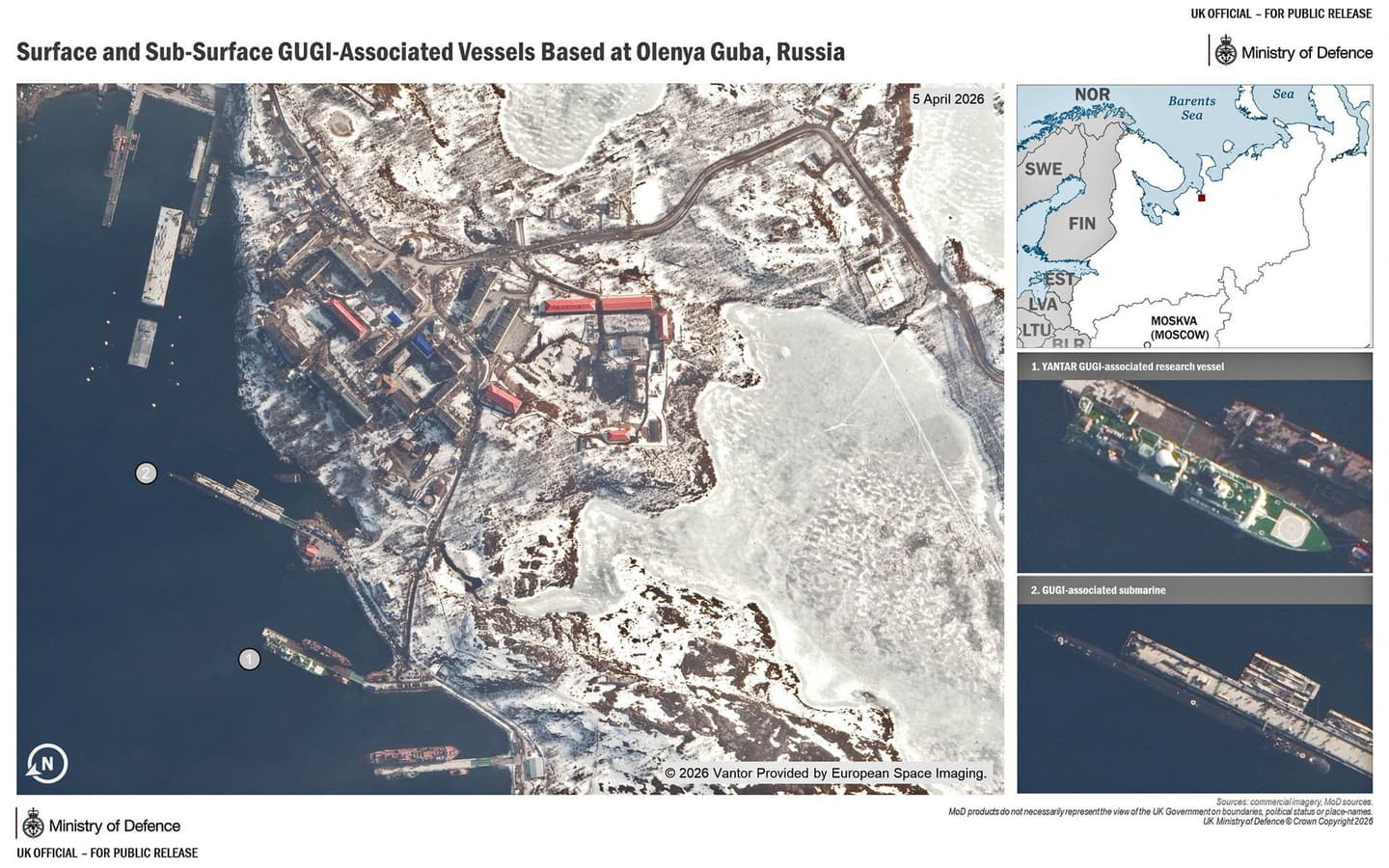
UK MOD Crown copyright/Reuters



What Happened
What Happened
Where Sources Agree
- arrows_inputAllied Disruption of Russian Drill: Coverage highlights that Britain, Norway, and the United States tracked and confronted Russian vessels near Svalbard this spring, preventing them from completing a covert exercise to simulate disabling undersea cables, according to Western officials cited by Reuters.
- arrows_inputNo Cable Damage Confirmed: Reports broadly predict heightened surveillance of critical infrastructure, as officials confirm that no subsea cables were damaged during the Russian exercise near Svalbard, according to Reuters.
- arrows_inputGUGI Submersible Operation: Most outlets confirm that Russia's Main Directorate for Deep-Sea Research (GUGI) deployed deep-sea submersibles to simulate the use of technology designed to disable critical undersea cables, according to Reuters and Western officials.
Where Sources Disagree
- arrows_outputRussian Drifting Activity Reporting: Some outlets cite maritime data showing that drifting activity in the North Sea rose 52% to 13,079 vessels last year. Conversely, other outlets focus exclusively on the specific Svalbard confrontation without referencing these broader vessel statistics.
- arrows_outputVessel Seizure Coverage: While most reporting focuses exclusively on the subsea cable exercise, some outlets note that Norway recently seized the Russian research vessel Professor Molchanov to enforce a compensation claim, a detail omitted by other coverage of the regional tensions.
Timeline
September 10, 2026
Reuters reveals US role and details: On September 10, 2026 Reuters reported that the covert Russian operation near Svalbard involved GUGI using deep‑sea submersibles to simulate a new weapon to sever undersea cables, and that American military personnel participated in the allied tracking and confrontation — details not previously reported. The reporting noted Western concern that such capabilities could be used in a future conflict while emphasising that no cables were damaged.
April 09, 2026
Joint disruption of Svalbard drill: This spring, a joint operation by Britain, Norway and the United States tracked and confronted Russian GUGI deep‑sea vessels near Svalbard that were rehearsing deployment of technology intended to disable undersea cables; the vessels were prevented from completing the exercise and left the area, and no cables were damaged. The area is strategically sensitive because two roughly 1,400 km subsea fiber‑optic cables linking Svalbard to mainland Norway lie as deep as 2,700 metres and carry large volumes of satellite data.
April 09, 2026
April detection of covert activity: Britain and Norway disclosed in April that they had uncovered covert Russian activity in Arctic/northern Atlantic waters, with Britain pointing to April 9 statements acknowledging attempted covert activities by Russia’s Main Directorate of Deep-Sea Research (GUGI). British forces said a Russian submarine and underwater vehicles had been spotted engaging in malicious activity over cables and pipelines.
Perspectives and Debates
What was the central development in the Arctic cable incident?
Summaries by Ground AI
Sources
See All 138Most Written About
The stories getting the most coverage from the last 24 hours







Timeline
September 10, 2026
Reuters reveals US role and details: On September 10, 2026 Reuters reported that the covert Russian operation near Svalbard involved GUGI using deep‑sea submersibles to simulate a new weapon to sever undersea cables, and that American military personnel participated in the allied tracking and confrontation — details not previously reported. The reporting noted Western concern that such capabilities could be used in a future conflict while emphasising that no cables were damaged.
April 09, 2026
Joint disruption of Svalbard drill: This spring, a joint operation by Britain, Norway and the United States tracked and confronted Russian GUGI deep‑sea vessels near Svalbard that were rehearsing deployment of technology intended to disable undersea cables; the vessels were prevented from completing the exercise and left the area, and no cables were damaged. The area is strategically sensitive because two roughly 1,400 km subsea fiber‑optic cables linking Svalbard to mainland Norway lie as deep as 2,700 metres and carry large volumes of satellite data.
April 09, 2026
April detection of covert activity: Britain and Norway disclosed in April that they had uncovered covert Russian activity in Arctic/northern Atlantic waters, with Britain pointing to April 9 statements acknowledging attempted covert activities by Russia’s Main Directorate of Deep-Sea Research (GUGI). British forces said a Russian submarine and underwater vehicles had been spotted engaging in malicious activity over cables and pipelines.


