Cassini Study Finds Enceladus Plumes Sort Salts Into Distinct Ice Grains
Munich, Germany
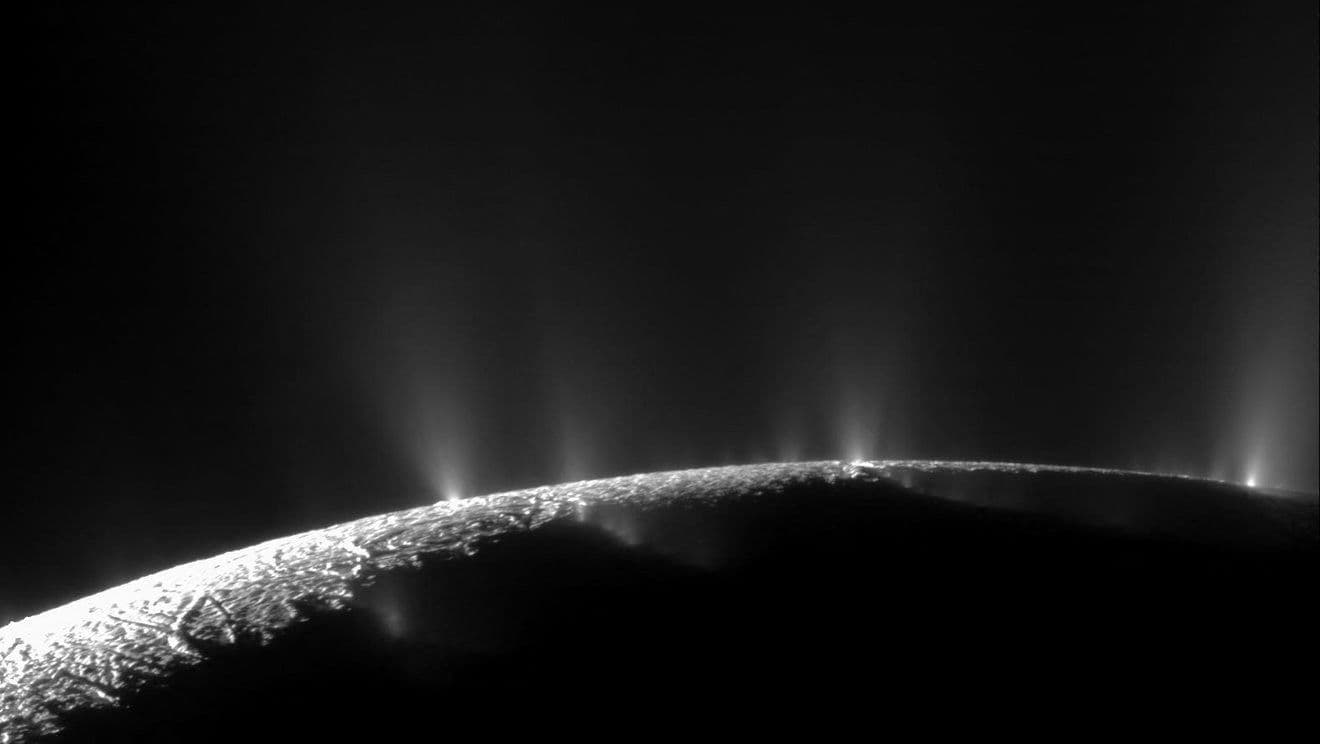
NASA/JPL-Caltech/Space Science I/Reuters




What Happened
Key Implications
What Happened
Key Implications
Where Sources Agree
- arrows_inputNatural Ice Grain Segregation: Most sources document that the slow freezing of Enceladus's oceanic spray, occurring at rates below 20 Kelvin per minute, separates dissolved salts into distinct chemical subtypes within individual ice grains, effectively performing natural sample preparation for analysis, according to Cassini CDA data and laboratory experiments.
- arrows_inputMicrobial Habitability Simulation: Sources largely converge on the finding that Methanothermococcus okinawensis microbes can thrive in simulated Enceladus-like conditions, including highly alkaline environments with restricted carbon dioxide, according to laboratory experiment results.
- arrows_inputFuture Life Detection Strategy: Most coverage confirms that future spacecraft must analyze individual ice particles to identify biosignatures, with research team recommendations noting that the plume's natural freezing process concentrates potential cellular material to simplify detection using existing technology.
Where Sources Disagree
- arrows_outputResearch Scope Coverage: While some sources focus exclusively on a single study regarding the compositional segregation of Enceladus' ice grains, others report on two simultaneous studies, including a second investigation into the potential for methanogenesis within the moon's subsurface ocean.
- arrows_outputEnceladus Mission Focus: While some sources emphasize the engineering challenges and orbital trajectories required for future Enceladus missions, other reports prioritize the scientific findings regarding the moon's subsurface ocean composition, habitability, and potential for extraterrestrial life.
Timeline
September 25, 2026
Implications for life and missions: The compositional segregation concentrates oceanic constituents into individual particles—improving the odds of detecting biosignatures—and, alongside a companion lab study showing a methanogen can grow under Enceladus-like conditions, bolsters the moon's astrobiological significance while motivating future missions to sample many plume particles.
September 25, 2026
Freezing experiments explain segregation: Laboratory freezing of simulated Enceladus ocean droplets and thermodynamic modeling showed that slow freezing of relatively large droplets (tens to hundreds of micrometers) causes different salts to precipitate at different temperatures and segregate into distinct ice particles, explaining the observed compositional separation.
September 25, 2026
Multiple salt subtypes found: Rather than a uniform salty composition, the analysis identified at least five distinct chemical subtypes of ice grains dominated by sodium chloride, sodium carbonate/bicarbonate, sodium phosphate, sodium hydroxide, or potassium salts, showing more compositional complexity than previously thought.
Summary by Ground AI
Sources
See All 58A varied selection of sources chosen by Ground to reflect the diversity of this story’s coverage.
Most Written About
The stories getting the most coverage from the last 24 hours




Timeline
September 25, 2026
Implications for life and missions: The compositional segregation concentrates oceanic constituents into individual particles—improving the odds of detecting biosignatures—and, alongside a companion lab study showing a methanogen can grow under Enceladus-like conditions, bolsters the moon's astrobiological significance while motivating future missions to sample many plume particles.
September 25, 2026
Freezing experiments explain segregation: Laboratory freezing of simulated Enceladus ocean droplets and thermodynamic modeling showed that slow freezing of relatively large droplets (tens to hundreds of micrometers) causes different salts to precipitate at different temperatures and segregate into distinct ice particles, explaining the observed compositional separation.
September 25, 2026
Multiple salt subtypes found: Rather than a uniform salty composition, the analysis identified at least five distinct chemical subtypes of ice grains dominated by sodium chloride, sodium carbonate/bicarbonate, sodium phosphate, sodium hydroxide, or potassium salts, showing more compositional complexity than previously thought.


