Voyager 1 Signals Now Take 24 Hours to Reach Earth After Crossing Light-Day Threshold
United States
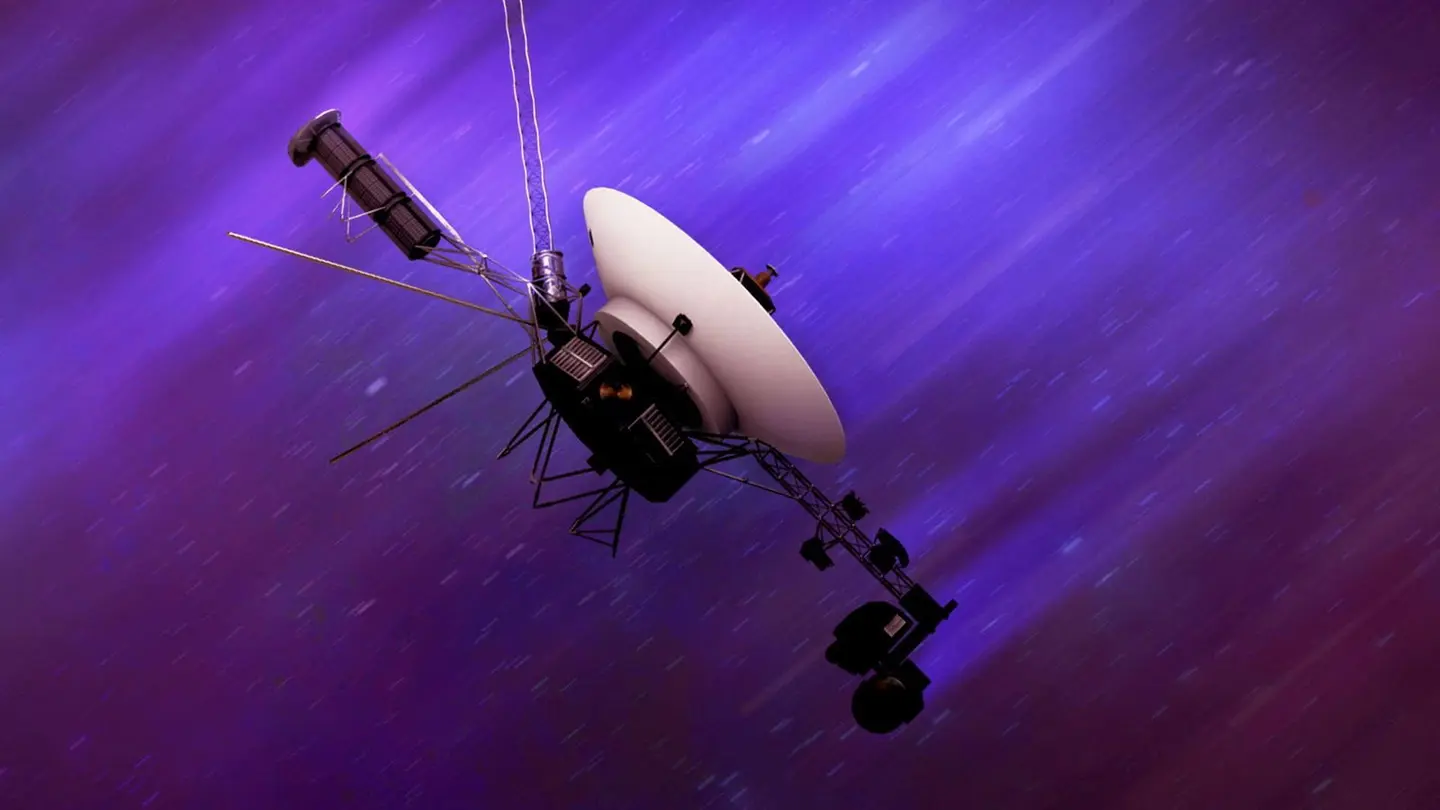
NASA/JPL-Caltech/Reuters
Source Analysis




What Happened
Key Implications
What Happened
Key Implications
Where Sources Disagree
- Milestone Timing Discrepancy: Sources report the timing of Voyager 1's light-day milestone with minor variation, with some outlets identifying 5:16 a.m. EST as the moment, while others specify 5:18 a.m. EST.
- Light-Day Milestone Definition: Most reports define the milestone as Voyager 1 reaching one light-day from Earth. In contrast, some sources argue the distance from the Sun is a more relevant metric, noting that Earth’s orbital motion complicates the calculation.
- Mission Longevity Estimates: NASA projects that mission contact will cease around 2036; however, other scientific estimates suggest the spacecraft's power sources will be depleted within 10 to 15 years, effectively ending data transmission.
Timeline
October 20, 2026
48‑Hour Communications Loss: NASA's Deep Space Network failed to detect Voyager 1 during scheduled contacts on October 18 and 19, 2026, leaving the spacecraft silent for about 48 hours before its signal unexpectedly returned on October 20, 2026; engineers have since maintained contact and investigated the cause. Fault-protection behavior (backup thrusters activating) and other anomalies were identified during the review.
September 01, 2026
'Big Bang' Power Upgrade: In early September 2026 engineers completed a coordinated power-saving operation nicknamed the "Big Bang," replacing three higher-power heating devices with lower-power alternatives to preserve heat balance and extend remaining science operations. The swap was intended to delay the shutdown of another science instrument that might otherwise have been required as early as summer 2027.
August 25, 2012
Crossed Into Interstellar Space: Voyager 1 crossed the heliopause and entered interstellar space in August 2012, becoming the first human-made object to do so and continuing to send scientific data home. The spacecraft has held the record for the most distant spacecraft since passing Pioneer 10.
Perspectives and Debates
Summary by Ground AI
Sources
See All 688A varied selection of sources chosen by Ground to reflect the diversity of this story’s coverage.
Most Written About
The stories getting the most coverage from the last 24 hours




Source Analysis
Timeline
October 20, 2026
48‑Hour Communications Loss: NASA's Deep Space Network failed to detect Voyager 1 during scheduled contacts on October 18 and 19, 2026, leaving the spacecraft silent for about 48 hours before its signal unexpectedly returned on October 20, 2026; engineers have since maintained contact and investigated the cause. Fault-protection behavior (backup thrusters activating) and other anomalies were identified during the review.
September 01, 2026
'Big Bang' Power Upgrade: In early September 2026 engineers completed a coordinated power-saving operation nicknamed the "Big Bang," replacing three higher-power heating devices with lower-power alternatives to preserve heat balance and extend remaining science operations. The swap was intended to delay the shutdown of another science instrument that might otherwise have been required as early as summer 2027.
August 25, 2012
Crossed Into Interstellar Space: Voyager 1 crossed the heliopause and entered interstellar space in August 2012, becoming the first human-made object to do so and continuing to send scientific data home. The spacecraft has held the record for the most distant spacecraft since passing Pioneer 10.


