Vienna and Beijing Teams Develop First Nuclear Clocks to Enhance GPS and Physics
Vienna, Austria
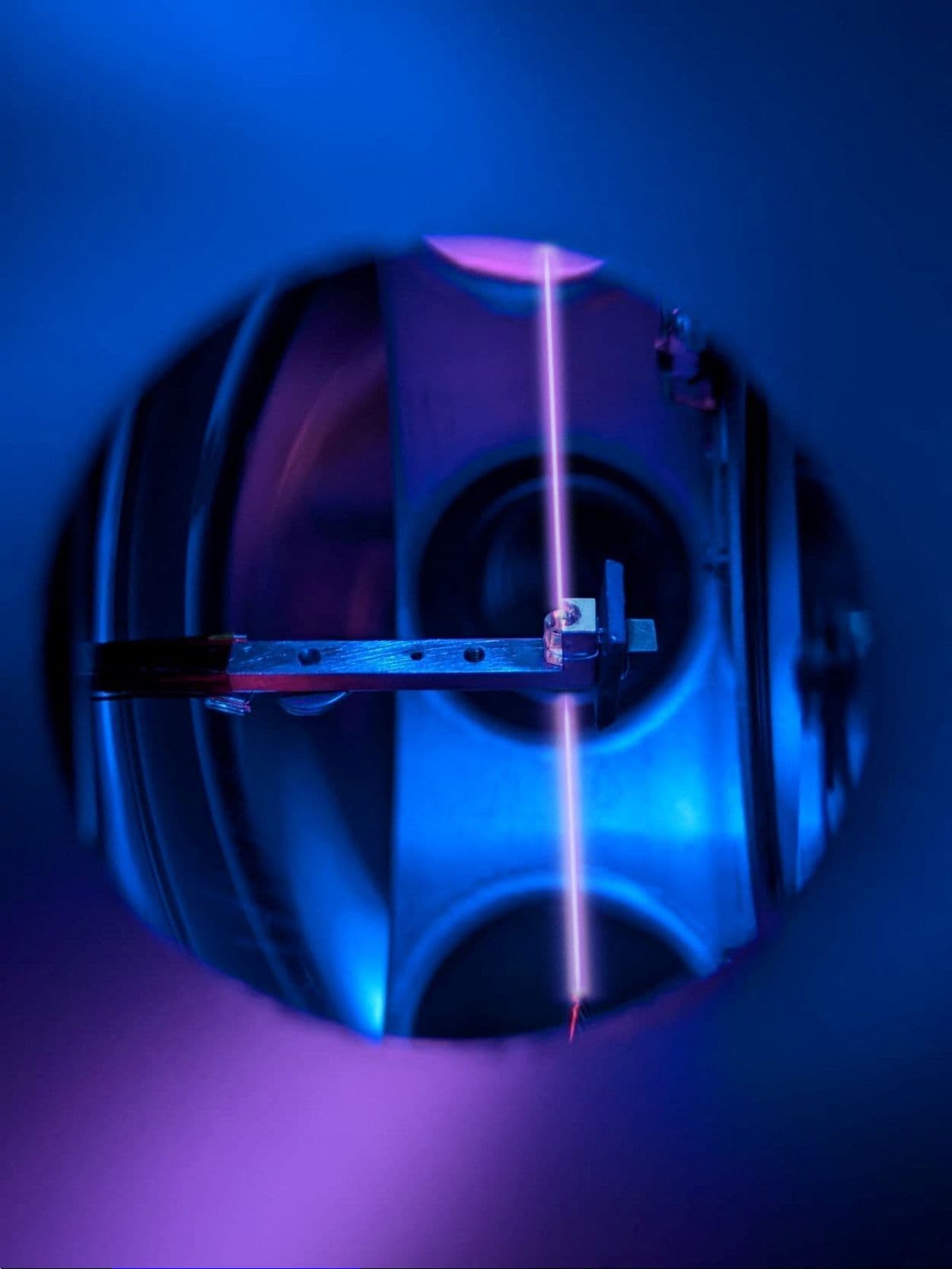
T. Schumm, TU Wien/Reuters




What Happened
Key Implications
What Happened
Key Implications
Where Sources Agree
- arrows_inputIndependent Nuclear Clock Development: Reporting establishes that independent scientific teams in Vienna and Beijing have successfully developed the world’s first operating nuclear clocks using the thorium-229 isotope, according to research published in the journal Nature.
- arrows_inputNuclear Clock Design: Coverage highlights the technical design of the world's first nuclear clocks, framing it as a breakthrough using ultraviolet lasers to manipulate thorium-229 isotopes trapped in calcium fluoride crystals, according to technical descriptions.
- arrows_inputUtility and Physics Potential: Predominant reporting shows the newly developed nuclear clocks offer significant potential to enhance navigation systems like GPS and probe fundamental physics; these devices may also provide a new tool for investigating dark matter, according to official research statements.
Where Sources Disagree
- arrows_outputNuclear Clock Performance Capabilities: Reports indicate that the Beijing-developed nuclear clock is approximately six times more stable than the competing system. Conversely, researchers highlight that the Vienna-based prototype is the first nuclear clock to incorporate a self-stabilizing feedback loop.
- arrows_outputDistinct Experimental Objectives: While the Vienna team utilized their nuclear clock to conduct dark matter search experiments, the Beijing team focused their efforts on demonstrating the clock's reproducibility and stability metrics.
Timeline
October 7, 2026
Prototype performance, tests, applications: The prototypes used thorium-229 in calcium fluoride crystals illuminated by an ultraviolet laser (148.4 nm) and are estimated to drift about one second every 30 million years; the Beijing device was reported about six times more stable than Vienna's, and both matched top atomic clocks for certain interactions. Teams used the clocks to search for dark matter (finding no evidence) and highlighted reproducibility of separate crystals, paths to stronger lasers and better crystals, and potential applications in GPS, metrology and fundamental-physics tests.
October 7, 2026
Vienna and Beijing unveil clocks: On Oct. 7, 2026, separate teams in Vienna (TU Wien) and Beijing (Tsinghua University) published papers in Nature describing the world's first operating thorium-229 nuclear-clock prototypes, developed independently but using the same isotope in crystals. Reuters and the teams reported the parallel breakthroughs and noted a growing global competition.
January 1, 2024
Laser drove nuclear transition (2024): In early 2024 researchers used a laser to produce the predicted change in a thorium nucleus that provides the "tick" needed for a nuclear clock, marking a key technical turning point enabling the devices. Reports say this breakthrough showed atomic nuclei could change states when prompted by a laser.
Summary by Ground AI
Sources
See All 81A varied selection of sources chosen by Ground to reflect the diversity of this story’s coverage.
Most Written About
The stories getting the most coverage from the last 24 hours





Timeline
October 7, 2026
Prototype performance, tests, applications: The prototypes used thorium-229 in calcium fluoride crystals illuminated by an ultraviolet laser (148.4 nm) and are estimated to drift about one second every 30 million years; the Beijing device was reported about six times more stable than Vienna's, and both matched top atomic clocks for certain interactions. Teams used the clocks to search for dark matter (finding no evidence) and highlighted reproducibility of separate crystals, paths to stronger lasers and better crystals, and potential applications in GPS, metrology and fundamental-physics tests.
October 7, 2026
Vienna and Beijing unveil clocks: On Oct. 7, 2026, separate teams in Vienna (TU Wien) and Beijing (Tsinghua University) published papers in Nature describing the world's first operating thorium-229 nuclear-clock prototypes, developed independently but using the same isotope in crystals. Reuters and the teams reported the parallel breakthroughs and noted a growing global competition.
January 1, 2024
Laser drove nuclear transition (2024): In early 2024 researchers used a laser to produce the predicted change in a thorium nucleus that provides the "tick" needed for a nuclear clock, marking a key technical turning point enabling the devices. Reports say this breakthrough showed atomic nuclei could change states when prompted by a laser.


