El Niño Pushes World Towards Record Heat as COP31 Opens
Berkeley Earth researchers cite a 95% likelihood of record-breaking temperatures this year due to the combined impact of El Niño and human-driven climate change.
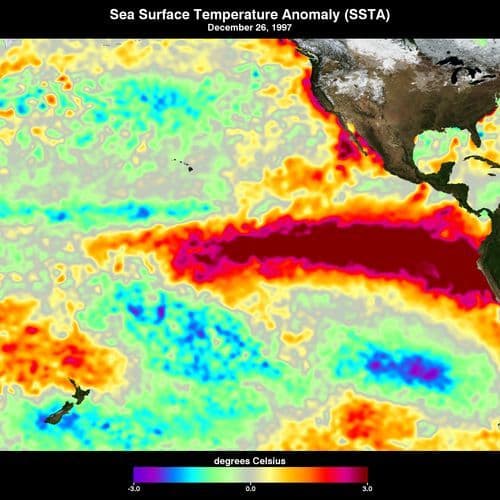
- On Monday, the World Meteorological Organization forecast that 2026 will rank among the four warmest years on record, with an unusually powerful El Niño continuing into 2027 and pushing temperatures higher.
- WMO Secretary-General Celeste Saulo explained that El Niño releases heat from the ocean, which is the warmest ever measured, while the Met Office notes about 90% of trapped greenhouse gas heat has been absorbed by oceans.
- Extensive wildfires across Europe and a glacier collapse in Nepal that killed more than 1,000 people illustrate rising heat's acute impact, which the Met Office linked to record heat made 130 times more likely by climate change.
- Negotiations at COP31 face divisions over electrification goals, with Saudi Arabia and Russia pushing for interim gas use, while the UN warned that climate damage is "substantial" and requires more than $85bn in funding.
- The world is on track for 2.8C of warming, exceeding the 1.5C Paris Agreement goal and guaranteeing the worst climate effects. UN climate chief Simon Stiell warned that "the urgency of this moment must drive us forward.
18 Articles
18 Articles


The last twelve years have been the warmest since the beginning of the records. Now the climate phenomenon El Niño could continue to excite the temperatures - what comes to the world?
 Zeit Online


Ankara: Scientists have warned that the Earth is heading towards extreme heat due to climate change and the El Nino phenomenon, and that 2026 is likely to become the hottest year in history. ...

This year could be one of the four hottest since records began, and UN experts warn that the planet is continuing to warm.

Super El Niño 2026 Could Shatter Global Temperature Records as New Forecasts Raise Concerns for 2027
Scientists are warning that the rapidly developing 2026 El Niño could push global temperatures to unprecedented levels in 2027, with new research calculating a 96% probability that next year will become the hottest on record. The warning comes as the World Meteorological Organization (WMO) releases new findings on extraordinary ocean heat and regional forecasts identify […]
Coverage Details
Bias Distribution
- 67% of the sources are Center


Factuality
To view factuality data please Upgrade to Premium