SoftBank Successfully Tests "Flying Base Station" over Japan, Bringing It Close to Practical Use and Raising Hopes for Its Use in Disaster Situations.
 This story is only covered by news sources that have yet to be evaluated by the independent media monitoring agencies we use to assess the quality and reliability of news outlets on our platform. Learn more here.
4 Articles
4 Articles

The Japanese operator SoftBank successfully performed a mobile connectivity test by means of a high-altitude platform station (HAPS). The structure operates in the stratosphere and functions, in practice, as a radio station based in the sky. Developed by the American Sceye, the airship provided 4G LTE connection for ground smartphones. #teletime #teletimenews

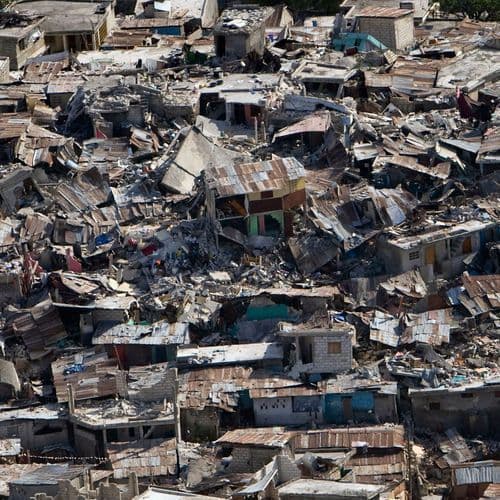
This technology is expected to be used as a communication method in disaster situations such as earthquakes and floods, as well as in remote areas. Softbank aims to commercialize it by 2027. SoftBank invests $500 billion to build AI data centers in the US. SoftBank races to raise over $22 billion to complete the "mega-deal" on OpenAI. SoftBank sells its entire stake in Nvidia for $5.8 billion.

In large-scale disasters such as the Nankai Trough earthquake, it is estimated that approximately 70% of mobile phone base stations will lose their function. What is expected as a trump card is a “flying base station,” which delivers communication over a wide area from the stratosphere. We covered the first demonstration test carried out on an aircraft that crossed the Pacific Ocean from America, and approached the capabilities and issues of cut…

SoftBank announced on the 2nd that it had successfully conducted communication tests of its "HAPS" (High-Area Mobile Platform), a type of mobile phone base station, over Japan. Expected to be useful during disasters such as earthquakes and typhoons, practical application is imminent. NTT Docomo is also planning tests in the Noto region of Ishikawa Prefecture in September…
Coverage Details
Bias Distribution
- There is no tracked Bias information for the sources covering this story.


Factuality
To view factuality data please Upgrade to Premium