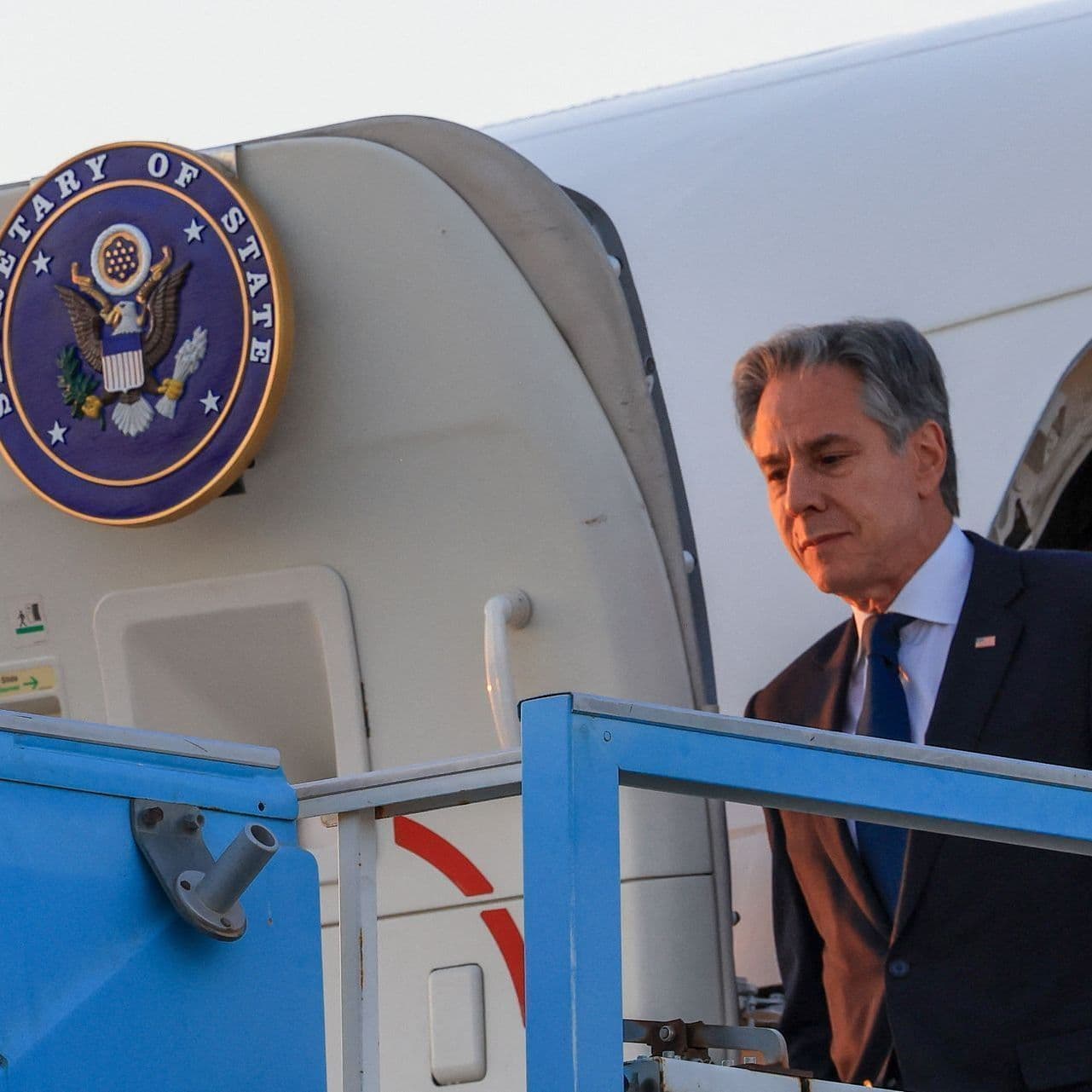
Iran’s foreign ministry spokesman answers Rubio’s Acropolis speech: it “deliberately omits” the other half of the Greek legacy
5 Articles
5 Articles

It is difficult for a Greek to stand on the Pnyx, with the Parthenon opposite him, and treat what was said there by Marco Rubio as yet another diplomatic compliment.

Marco Rubio's remarks about the Achaemenids should not be seen as a historical slip or a diplomatic remark. These remarks are part of a coherent strategy that goes beyond changing Iran's political system to weakening Iran's historical identity and territorial integrity.

In Marco Rubio’s account of history, Xerxes is not just a king who invaded Greece; he becomes a symbol of East versus West, who sees himself as the heir to freedom and reason. By linking the Iran-Greece wars to today’s conflicts, the US secretary of state revives a narrative in which ancient Iran is positioned as the historical enemy of freedom, a narrative that informs the needs of contemporary politics rather than reflecting the complexity of …

Iran’s foreign ministry spokesman answers Rubio’s Acropolis speech: it “deliberately omits” the other half of the Greek legacy
Iranian foreign ministry spokesman Esmaeil Baghaei responded on X to Marco Rubio’s October 7 speech at the Pnyx in Athens, accusing the US secretary of state of presenting the history of the West as a single continuum and of turning the Greek notion of thumos into a celebration of power.

October 9, 2026 Baghdad/Basel: In an escalation of politics wearing historical dress, United States Secretary of State Marco Rubio...
Coverage Details
Bias Distribution
- 100% of the sources lean Right


Factuality
To view factuality data please Upgrade to Premium