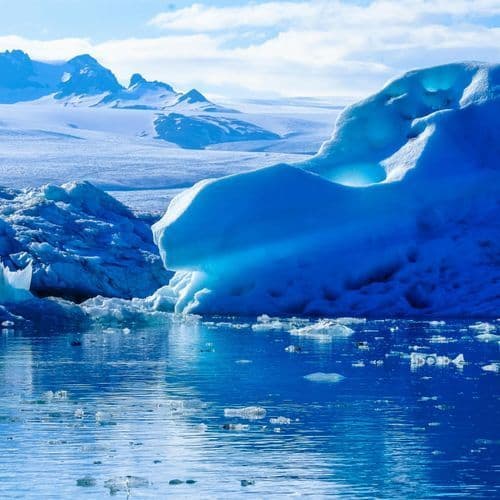
Himalayas approaching tipping point, millions of livelihoods at stake-report
Researchers say 21 glaciers are monitored on the ground across the vast mountain system, leaving major gaps as melt speeds up and lakes grow more unstable.
- A study by sustainability advisory firm Systemiq released this month warns that Himalayan glaciers are approaching a tipping point, melting 65% faster than a decade ago as the region nears 'peak water' by mid-century.
- Roughly one-third of this glacier melt results from black carbon emissions, largely from plains-based brick kilns, while only 21 of an estimated 40,000 glaciers are currently monitored on the ground.
- A glacier collapse along the Nepal-Tibet border killed at least 1,300 people, a recent disaster demonstrating the danger, while 56 of India's glacial lakes are classified as 'very high risk.'
- Himalayan water underpins more than 20% of India's GDP, sustaining vast agricultural and hydropower economies, a dependency the study identifies as critical national economic infrastructure.
- International Centre for Integrated Mountain Development Director General Pema Gyamtsho warned that hazards 'do not respect national borders,' urging shared risk information and joint investment in resilience across the region.
14 Articles
14 Articles

The Himalayas region is approaching a critical threshold, as glaciers melt faster and faster. This acceleration of melting ice threatens the security of water supply, as the region is approaching the time when the amount from melting ice will reach a maximum, estimated to take place until the middle of the century, after which...


HIMALAYAN glaciers are melting 65% faster than a decade ago, increasing the risk of flooding and threatening the water resources on which millions of people and a significant part of India's economy depend.


Himalayas approaching tipping point, millions of livelihoods at stake
The Himalayas are approaching a tipping point as glaciers melt faster than a decade ago, threatening water security as the region approaches "peak water" by mid-century, according to a study released this month.
Coverage Details
Bias Distribution
- 50% of the sources are Center


Factuality
To view factuality data please Upgrade to Premium