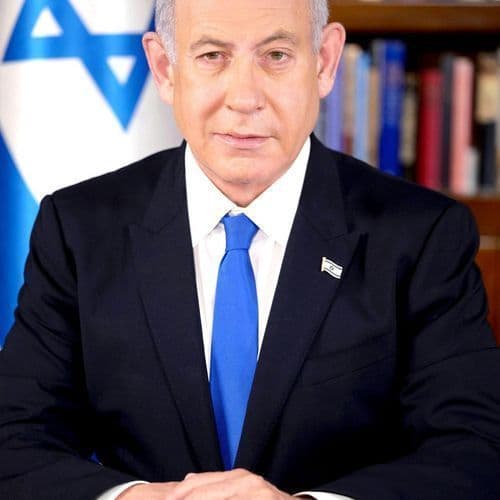
Arab Parties in Israel Signal Readiness to Help Oust Netanyahu
Arab parties said they could back an alternative government, as the opposition fell short of a majority and final results remained unsettled.
- With neither major bloc reaching the 61-seat majority after Tuesday's election, Arab-led parties hold 17 seats, acting as potential kingmakers. Prime Minister Benjamin Netanyahu's bloc is projected at 54 seats, while the opposition holds 49.
- High turnout among Arab citizens drove the historic result, with Arab-led parties achieving their strongest showing to date. Netanyahu had spent the campaign warning his base against this outcome, labeling potential partnerships as "treasonous."
- Democrats party leader Yair Golan urged opposition leaders to form a government with Arab-led parties to unseat Netanyahu. However, Gadi Eisenkot resisted, pledging to form a "Zionist government" instead, reflecting internal ideological divisions.
- President Isaac Herzog must now decide which party leader to task with forming a government, a process requiring weeks of negotiation. Herzog warned on Wednesday that Israel must do "everything possible to avoid another round of elections."
- If coalition talks fail, Israel faces the possibility of new elections early next year. Netanyahu, currently fighting corruption charges, remains in office while the political deadlock creates uncertainty about governance options.
279 Articles
279 Articles


Arab Israeli parties emerge as wild card in elections
Israel’s 2026 parliamentary elections are set to amount to political deadlock, with neither Prime Minister Benjamin Netanyahu nor Gadi Eisenkot getting enough votes to form a government. One clear winner did emerge, however, with enough votes to decisively influence the outcome: Israeli Arabs. The latest results, as of 8:30 p.m. local time, give Ra’am and […]

Palestinian citizens in Israel seem to be about to obtain a record number of seats in parliament and could become decisive factors in the formation of the government, after a strong presence at the vote in the Tuesday elections, stimulated by what they describe as the racist policies of Prime Minister Benjamin Netanyahu's government, writes Reuters. However, although they could have contributed to preventing a categorical victory of Netanyahu an…

After the ballot, it is unclear who will lead the government in the future. Challenger Eisenkot would need the help of Arab lists.

The leader of Israel's opposition group United List, Yousef Jabarin, said his party was ready to support an alternative government to oust Prime Minister Benjamin Netanyahu. He specified that the formation will not participate in a coalition, but could provide support from outside. “We do not see how we could participate in a coalition under the current circumstances,” Jabarin was quoted as saying by France Press. According to him, the position …

The Israeli Head of State is not obliged to appoint the candidate who obtained the most votes after the vote count on Tuesday, 27 October. He must choose the candidate who is best able to obtain a vote of confidence in Parliament.
Coverage Details
Bias Distribution
- 37% of the sources lean Right


Factuality
To view factuality data please Upgrade to Premium