German-Japanese Team Prototypes Heat-Driven Cooling Film for Data Centers
Karlsruhe, Germany
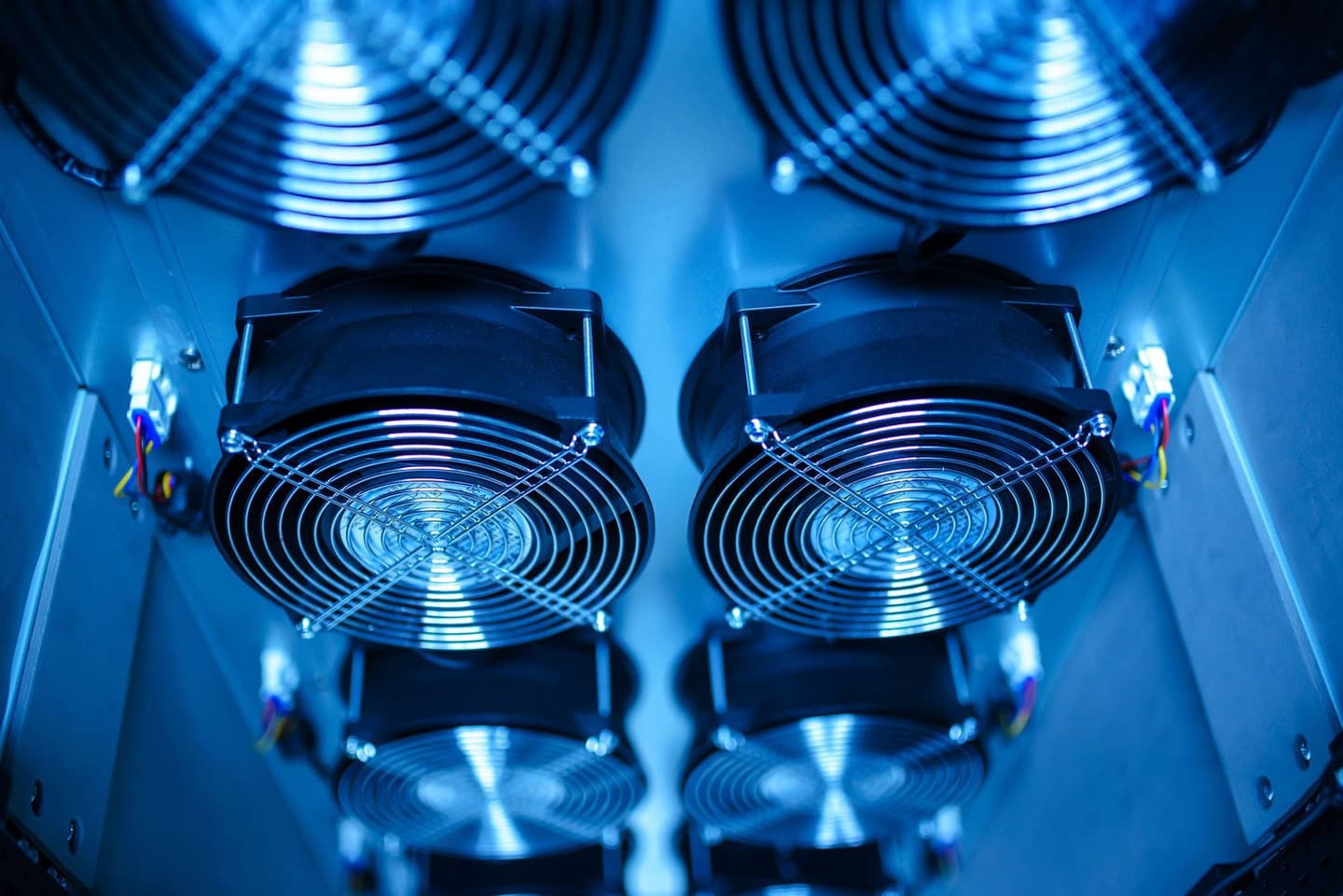
panumas nikhomkhai/Pexels
Source Analysis




What Happened
What Happened
Where Sources Agree
- arrows_inputHeat-Driven Cooling Prototype: Most sources document that researchers from the Karlsruhe Institute of Technology and the University of Tsukuba successfully prototyped an electricity-free cooling system that uses shape-memory alloy films to convert thermal energy directly into mechanical work, according to research published in Nature Energy.
- arrows_inputData Center Energy Costs: Reporting establishes that cooling systems drive significant power expenses in data centers, accounting for up to 40 percent of a facility's power bill, according to Bank of America estimates.
Where Sources Disagree
- arrows_outputCooling Technology Effectiveness: Researchers report that elastocaloric cooling is far more efficient than existing compact technologies; however, other analyses emphasize that solid-state systems require further development to match the effectiveness of cooling solutions currently on the market.
- arrows_outputCooling Technology Focus: Business outlets highlight the current commercial surge in data center infrastructure and liquid cooling demand. In contrast, other reporting emphasizes a new German-Japanese prototype that leverages waste heat to provide electricity-free cooling.
Timeline
September 1, 2026
Implications for data centres: Researchers and industry note the approach could let high‑performance chips reuse exhaust heat to self‑cool and could be applied to automotive electronics, with elastocaloric cooling touted as more efficient than compact existing technologies; the development comes as cooling already accounts for up to 40% of data‑centre power bills and liquid and new solid‑state solutions attract growing attention.
September 1, 2026
Measured prototype performance: Initial experiments showed practical feasibility: at an 86°C actuator input the prototype produced a ~4°C component‑level temperature drop and nearly 13°C cooling in the elastocaloric material, demonstrated reliable operation with external heat up to 130°C, and reached up to 84% of its theoretical cooling efficiency; researchers are scaling output by connecting films in parallel.
August 31, 2026
Prototype: electricity‑free cooling: Researchers at Germany's KIT and Japan's University of Tsukuba prototyped an electricity‑free solid‑state cooling system that pairs two ultra‑thin nickel‑titanium shape‑memory films—one film converts heat into mechanical work and the other converts that work into cooling—achieving operation without an electric motor. The system uses a 22‑micrometer shape‑memory actuator film paired with a 26.5‑micrometer superelastic refrigerant film.
Summaries by Ground AI
Sources
See All 21Most Written About
The stories getting the most coverage from the last 24 hours





Source Analysis
Timeline
September 1, 2026
Implications for data centres: Researchers and industry note the approach could let high‑performance chips reuse exhaust heat to self‑cool and could be applied to automotive electronics, with elastocaloric cooling touted as more efficient than compact existing technologies; the development comes as cooling already accounts for up to 40% of data‑centre power bills and liquid and new solid‑state solutions attract growing attention.
September 1, 2026
Measured prototype performance: Initial experiments showed practical feasibility: at an 86°C actuator input the prototype produced a ~4°C component‑level temperature drop and nearly 13°C cooling in the elastocaloric material, demonstrated reliable operation with external heat up to 130°C, and reached up to 84% of its theoretical cooling efficiency; researchers are scaling output by connecting films in parallel.
August 31, 2026
Prototype: electricity‑free cooling: Researchers at Germany's KIT and Japan's University of Tsukuba prototyped an electricity‑free solid‑state cooling system that pairs two ultra‑thin nickel‑titanium shape‑memory films—one film converts heat into mechanical work and the other converts that work into cooling—achieving operation without an electric motor. The system uses a 22‑micrometer shape‑memory actuator film paired with a 26.5‑micrometer superelastic refrigerant film.


