MeerKAT Traces First Radio Signal Directly to Exoplanet Beta Pictoris b
United States
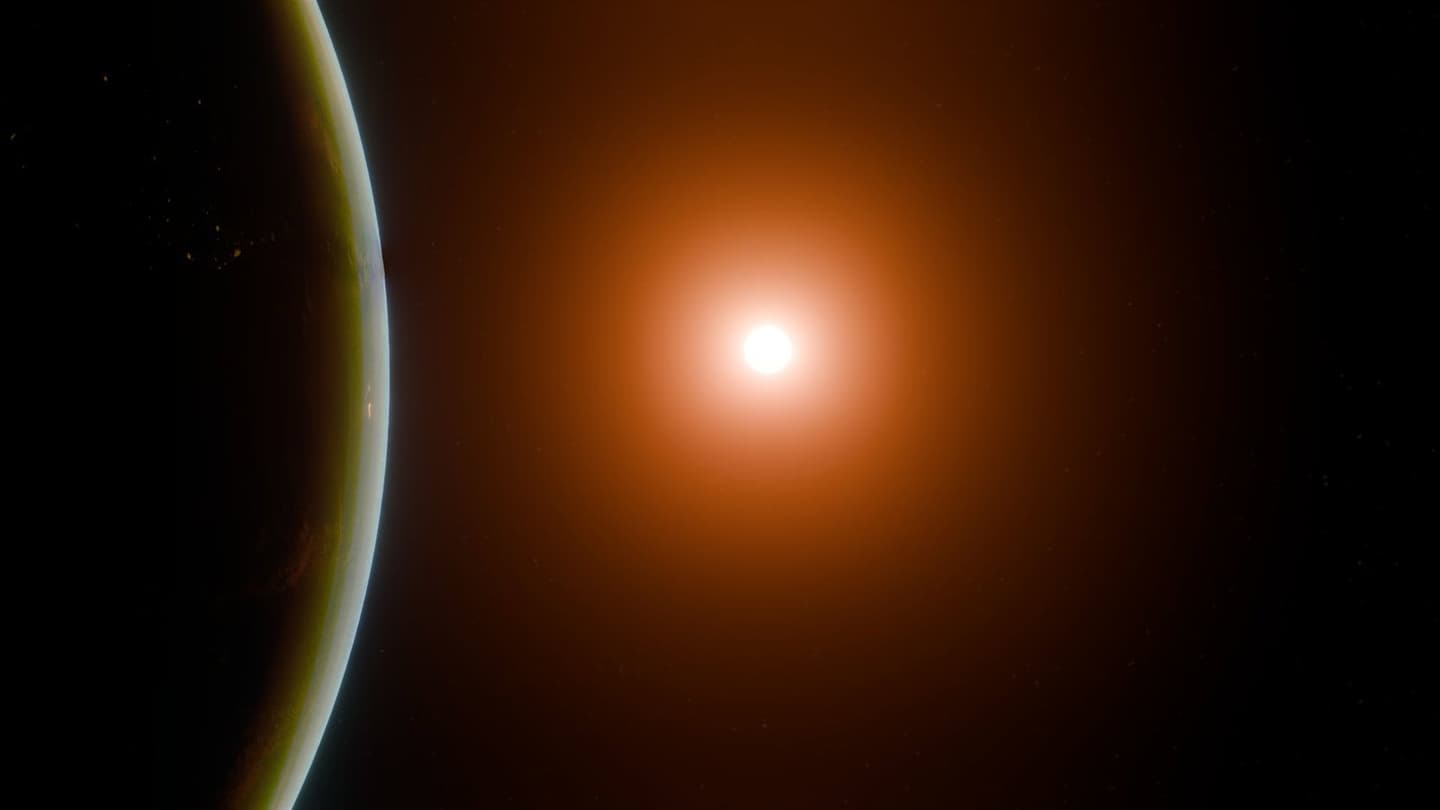
Zelch Csaba/Pexels
Source Analysis




What Happened
What Happened
Where Sources Agree
- arrows_inputRadio Signal Localized to Exoplanet: Initial reports confirm that radio waves have been traced directly to the exoplanet Beta Pictoris b rather than its host star, with detections made by the MeerKAT radio telescope array during observations in 2025 and 2026, according to researchers.
- arrows_inputAuroral Signal Origin: Reports consistently note that the radio signal originates from an auroral process rather than extraterrestrial communication, with the emission produced by electron cyclotron maser instability, according to the researchers.
- arrows_inputFirst Exoplanet Magnetic Field Measurement: Sources across outlets confirm that researchers have achieved the first direct measurement of an exoplanet's magnetic field by analyzing radio emissions from Beta Pictoris b, which is estimated to be thousands of times stronger than Earth's.
Where Sources Disagree
- arrows_outputExoplanet Mass Estimates: While several reports characterize Beta Pictoris b as having a mass roughly 10 times that of Jupiter, others cite estimates placing the planet's mass at 12 times that of Jupiter.
- arrows_outputBeta Pictoris Distance: Reports vary slightly regarding the distance to the Beta Pictoris system, with some sources citing 63 light-years while others place it at 64 light-years.
Timeline
September 15, 2026
Magnetic field inferred and ECMI: The radio bursts' properties point to electron cyclotron maser instability (ECMI) auroral emission, and a burst detected up to 3.5 GHz implies a magnetic field of at least ~1.25 kilogauss at the emission site—thousands of times stronger than Earth's. Researchers describe this as the first direct measurement of an exoplanet's magnetic-field strength and note the planet's rapid ~8–9 hour rotation may help power the auroral emission.
September 15, 2026
Emission localized to planet: Using distant quasars as reference points to map the sky, researchers were able to localize the radio emission with high confidence to Beta Pictoris b rather than the host star, marking the first unambiguous radio detection tied to an exoplanet. The result was announced by a team from the Center for Astrophysics | Harvard & Smithsonian and the University of Oregon and was posted as a preprint to arXiv.
January 1, 2025
MeerKAT detects radio bursts: The MeerKAT radio telescope array in South Africa observed the Beta Pictoris system on four occasions during 2025 and 2026, detecting rapid, recurring, strongly circularly polarized radio bursts and persistent emission in the ~0.85–3.5 GHz band. These short, repeating bursts exhibited signatures consistent with auroral radio emission.
Perspectives and Debates
What is the primary significance of the Beta Pictoris b radio detection?
Summary by Ground AI
Sources
See All 250A varied selection of sources chosen by Ground to reflect the diversity of this story’s coverage.
Most Written About
The stories getting the most coverage from the last 24 hours






Source Analysis
Timeline
September 15, 2026
Magnetic field inferred and ECMI: The radio bursts' properties point to electron cyclotron maser instability (ECMI) auroral emission, and a burst detected up to 3.5 GHz implies a magnetic field of at least ~1.25 kilogauss at the emission site—thousands of times stronger than Earth's. Researchers describe this as the first direct measurement of an exoplanet's magnetic-field strength and note the planet's rapid ~8–9 hour rotation may help power the auroral emission.
September 15, 2026
Emission localized to planet: Using distant quasars as reference points to map the sky, researchers were able to localize the radio emission with high confidence to Beta Pictoris b rather than the host star, marking the first unambiguous radio detection tied to an exoplanet. The result was announced by a team from the Center for Astrophysics | Harvard & Smithsonian and the University of Oregon and was posted as a preprint to arXiv.
January 1, 2025
MeerKAT detects radio bursts: The MeerKAT radio telescope array in South Africa observed the Beta Pictoris system on four occasions during 2025 and 2026, detecting rapid, recurring, strongly circularly polarized radio bursts and persistent emission in the ~0.85–3.5 GHz band. These short, repeating bursts exhibited signatures consistent with auroral radio emission.


