SpaceX Rocket Stage Set to Hit the Moon on August 5
United States
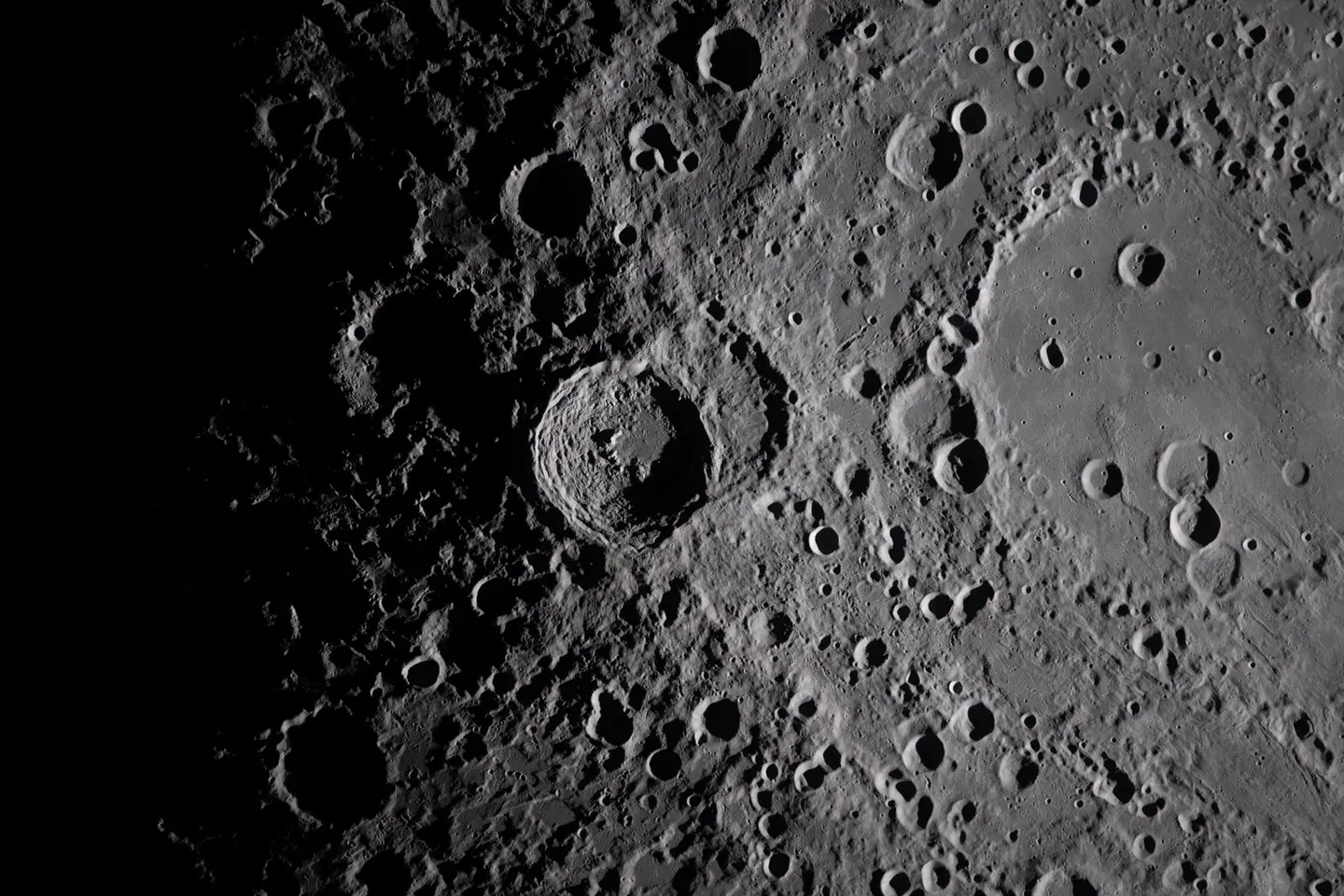
NASA/Reuters
Source Analysis




What Happened
Key Implications
What Happened
Key Implications
Where Sources Agree
- arrows_inputRocket Impact Speed Confirmed: Outlets predominantly note that an abandoned SpaceX rocket upper stage will collide with the Moon at 5,400 mph; this trajectory has been confirmed by independent tracker Bill Gray and NASA’s Center for Near-Earth Object Studies.
- arrows_inputPredicted Crater Dimensions: Most accounts emphasize that the abandoned SpaceX rocket is projected to carve out a crater roughly 20 to 30 meters, or 66 to 98 feet, wide upon impact, according to researchers including Los Alamos National Laboratory’s Benjamin Fernando.
- arrows_inputMoon Impact Timing Confirmed: Sources largely converge on the August 5 impact of an abandoned SpaceX rocket upper stage near the Moon's Einstein Crater at approximately 02:35 a.m. ET, according to NASA's Center for Near-Earth Object Studies and tracking expert Bill Gray.
Where Sources Disagree
- arrows_outputImpact Energy Estimates: Reports differ slightly on the energy released by the impact, with some sources citing the equivalent of 3 tons of TNT, while others calculate the force at 2.8 tons of TNT.
- arrows_outputRocket Mass Estimates: Reports differ slightly on the rocket's mass, with some sources citing approximately 4,500 kilograms, while others estimate the weight at roughly 4,000 kilograms.
- arrows_outputRocket Impact Velocity: Reports vary slightly regarding the rocket's impact speed, with numerous sources citing 5,400 mph, while others specify 5,437 mph.
Timeline
August 5, 2026
Impact scheduled for observation: The abandoned SpaceX upper stage was expected to slam into the Moon on August 5, 2026 (early UTC), striking the near side near Einstein Crater at roughly 5,400 mph and likely carving a ~20–30 metre (≈27 m) crater while producing a debris plume that NASA's LRO and South Korea's Danuri planned to image before and after the impact. Observers noted the flash would be brief and may be challenging to see from Earth without sensitive equipment.
August 4, 2026
Calls for better lunar governance: The impending accidental impact reignited debate over lunar governance, with commentators citing gaps in the 1967 Outer Space Treaty and urging measures like a lunar registry and coordinated notices for lunar operators to protect cultural and scientific sites. Analysts warned the incident highlights the need to apply and operationalize existing international rules.
July 30, 2026
Upper stage tracked as hazard: Astronomers determined the spent Falcon 9 upper stage remained in an unstable orbit and by mid‑2026 was predicted to be on a collision course with the lunar surface near Einstein Crater, with an estimated impact speed of about 5,400 mph and kinetic energy ~11.8 GJ. Modeling teams also predicted a substantial ejecta plume and central spike reaching tens of kilometres, offering a rare opportunity for observations.
Perspectives and Debates
Does the SpaceX Moon impact primarily reveal a scientific opportunity or an international governance failure?
Summary by Ground AI
Sources
See All 474A varied selection of sources chosen by Ground to reflect the diversity of this story’s coverage.
Most Written About
The stories getting the most coverage from the last 24 hours






Source Analysis
Timeline
August 5, 2026
Impact scheduled for observation: The abandoned SpaceX upper stage was expected to slam into the Moon on August 5, 2026 (early UTC), striking the near side near Einstein Crater at roughly 5,400 mph and likely carving a ~20–30 metre (≈27 m) crater while producing a debris plume that NASA's LRO and South Korea's Danuri planned to image before and after the impact. Observers noted the flash would be brief and may be challenging to see from Earth without sensitive equipment.
August 4, 2026
Calls for better lunar governance: The impending accidental impact reignited debate over lunar governance, with commentators citing gaps in the 1967 Outer Space Treaty and urging measures like a lunar registry and coordinated notices for lunar operators to protect cultural and scientific sites. Analysts warned the incident highlights the need to apply and operationalize existing international rules.
July 30, 2026
Upper stage tracked as hazard: Astronomers determined the spent Falcon 9 upper stage remained in an unstable orbit and by mid‑2026 was predicted to be on a collision course with the lunar surface near Einstein Crater, with an estimated impact speed of about 5,400 mph and kinetic energy ~11.8 GJ. Modeling teams also predicted a substantial ejecta plume and central spike reaching tens of kilometres, offering a rare opportunity for observations.


