Cassini Study Finds Enceladus Ice Grains Sort Salts and Organics
Munich, Germany
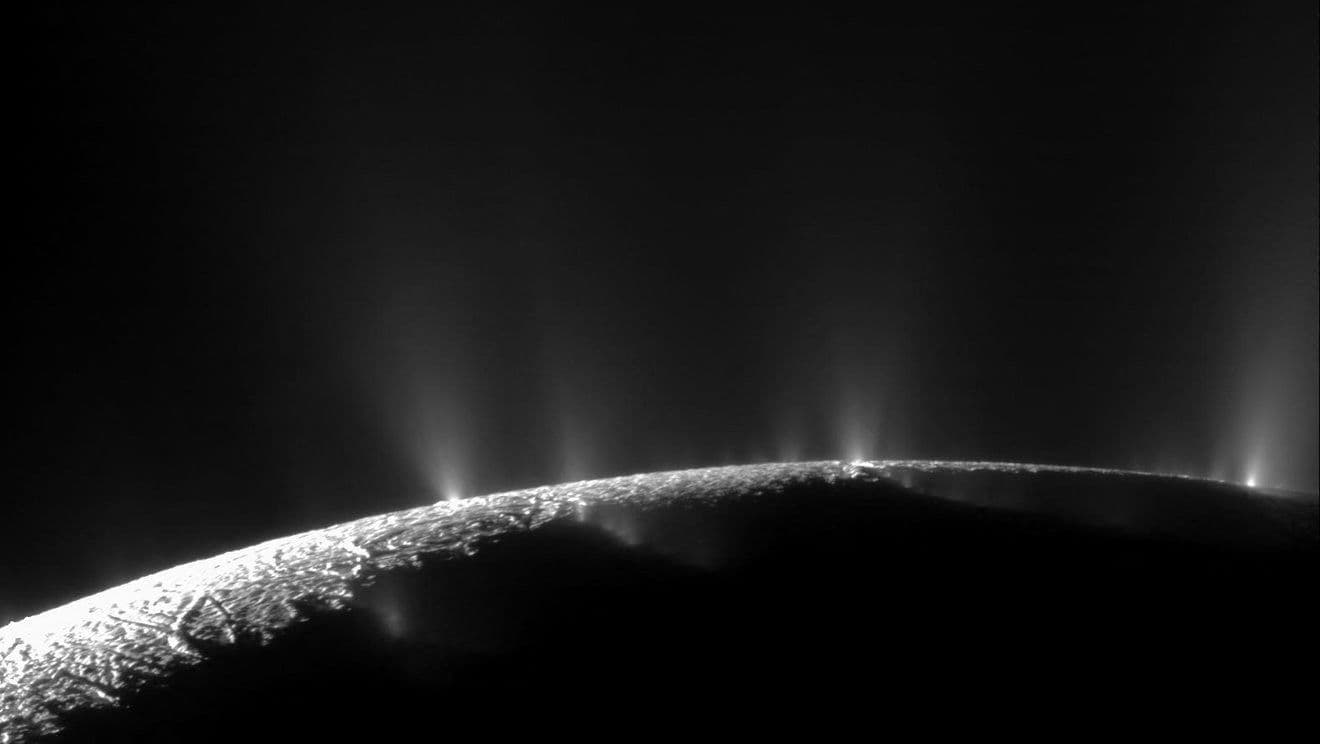
NASA/JPL-Caltech/Space Science I/Reuters




What Happened
Key Implications
What Happened
Key Implications
Where Sources Disagree
- arrows_outputFreezing Rate Threshold Discrepancy: Some studies define the slow freezing process as occurring at 10 K per minute or less. In contrast, other reports characterize this threshold as below 20 K per minute.
Timeline
September 25, 2026
Implications for habitability and sampling: The papers (published September 25, 2026) link the segregation-and-concentration process to potential prebiotic chemistry and show methanogen growth under simulated Enceladus conditions; they conclude that organic/biosignature molecules may be concentrated in only some grains, so future missions must analyze many individual particles.
September 25, 2026
Proposed freezing-and-fragmentation mechanism: Researchers propose ocean spray droplets form tens-to-hundreds µm, freeze gradually while moving through vents, then collide and fragment near the surface into micrometer-scale grains—each fragment preserving different salt-rich regions.
September 25, 2026
Laboratory freezing experiments: Laboratory experiments freezing Enceladus-like droplets (≈200 µm) showed that slow freezing (≈10 K per minute or less) causes different salts to crystallize into separate regions, while rapid freezing keeps ingredients mixed.
Summary by Ground AI
Sources
See All 74A varied selection of sources chosen by Ground to reflect the diversity of this story’s coverage.
Most Written About
The stories getting the most coverage from the last 24 hours





Timeline
September 25, 2026
Implications for habitability and sampling: The papers (published September 25, 2026) link the segregation-and-concentration process to potential prebiotic chemistry and show methanogen growth under simulated Enceladus conditions; they conclude that organic/biosignature molecules may be concentrated in only some grains, so future missions must analyze many individual particles.
September 25, 2026
Proposed freezing-and-fragmentation mechanism: Researchers propose ocean spray droplets form tens-to-hundreds µm, freeze gradually while moving through vents, then collide and fragment near the surface into micrometer-scale grains—each fragment preserving different salt-rich regions.
September 25, 2026
Laboratory freezing experiments: Laboratory experiments freezing Enceladus-like droplets (≈200 µm) showed that slow freezing (≈10 K per minute or less) causes different salts to crystallize into separate regions, while rapid freezing keeps ingredients mixed.


