COP31 Drafts Call for Carbon Removal as 1.5C Limit Slips Away
Turkey
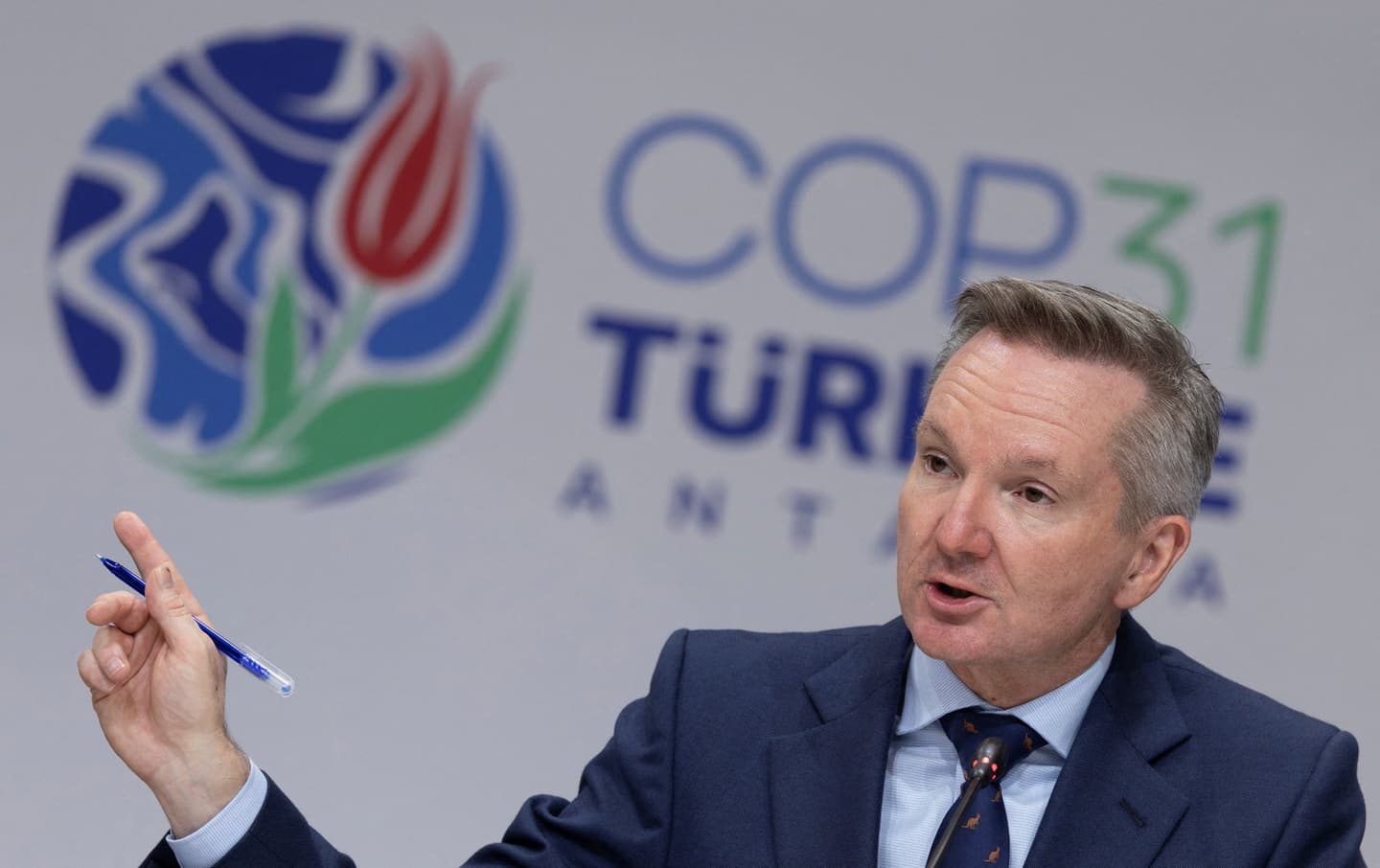
Umit Bektas/Reuters
Source Analysis




What Happened
What Happened
Where Left Sources Focus
- Mechanical vs. Nature-Based Solutions: Left sources prioritize the technical distinction between nature-based and mechanical carbon removal, citing researchers who argue that tree planting is insufficient and that mechanical "giant fan" devices are still in early pilot stages, according to the Potsdam Institute for Climate Impacts Research.
- Danger of 1.5C Breach: Left sources focus on the urgency of maintaining a safe global temperature, emphasizing that exceeding the 1.5C threshold poses significant dangers to the environment, citing warnings from the Potsdam Institute for Climate Impacts Research regarding the necessity of carbon removal.
Where Center Sources Focus
- Carbon Removal Economic Costs: Center-leaning reports highlight the massive financial burden of large-scale carbon removal, citing climate scientists who estimate that returning temperatures to below the Paris threshold would cost between $44 and $66 trillion by 2100.
- Paris Agreement Threshold Breach: Center media focus on the inevitability of breaching the Paris agreement's 1.5C threshold, emphasizing that carbon removal must serve as an addition to, rather than a replacement for, deep emission cuts, as noted by United Nations Environment Programme officials.
What's Largely Absent from Each Side
- Left sources rarely mention: Left sources rarely mention specific details regarding the "Group of Negative Emitters" (GONE) coalition or national emission targets, while center outlets feature these political frameworks prominently to contextualize global reduction strategies.
- Center sources rarely mention: Center coverage largely omits specific Potsdam Institute analysis regarding the current pilot-scale limitations of mechanical carbon removal technology, while left-leaning sources detail why nature-based solutions are currently insufficient for required targets.
Rare Agreement
- Climate Reality Consensus: Sources across the ideological spectrum agree that breaching the 1.5C Paris threshold is now inevitable and that carbon removal is a necessary, albeit secondary, component alongside deep emission cuts to manage future warming.
Timeline
November 20, 2026
Tech, limits, and policy responses: Experts said nature‑based approaches (about 2 billion metric tons removed in the past decade) are far too small, pointing instead to mechanical direct air capture pilots and hopes to scale to 5 billion metric tons by 2050; meanwhile, nations and coalitions moved on policy, with Denmark and Ethiopia leading the Group of Negative Emitters and Denmark aiming for a 110% emissions reduction — though speakers emphasized deep pollution cuts must come first.
November 20, 2026
Scale and cost quantified: Officials and scientists quantified the challenge: UNEP said about 320 billion metric tons of CO2 must be removed this century (roughly eight years of current emissions), while researchers estimated costs — roughly $22 trillion per 0.1°C of temperature reduction and $44–$66 trillion in an optimistic peaking scenario by 2100. These figures framed the financial and logistical scale of planned removal.
November 19, 2026
COP31 drafts accept failure: Early drafts of the COP31 end‑of‑conference communique acknowledged the world has failed to prevent 1.5°C of warming and signaled that global talks are likely to conclude carbon removal will be required in addition to emissions cuts. Delegates framed removal as necessary to 'bend the curve back down' after decades in a more dangerous temperature zone.
Summary by Ground AI
Sources
See All 32A varied selection of sources chosen by Ground to reflect the diversity of this story’s coverage.
Most Written About
The stories getting the most coverage from the last 24 hours







Source Analysis
Timeline
November 20, 2026
Tech, limits, and policy responses: Experts said nature‑based approaches (about 2 billion metric tons removed in the past decade) are far too small, pointing instead to mechanical direct air capture pilots and hopes to scale to 5 billion metric tons by 2050; meanwhile, nations and coalitions moved on policy, with Denmark and Ethiopia leading the Group of Negative Emitters and Denmark aiming for a 110% emissions reduction — though speakers emphasized deep pollution cuts must come first.
November 20, 2026
Scale and cost quantified: Officials and scientists quantified the challenge: UNEP said about 320 billion metric tons of CO2 must be removed this century (roughly eight years of current emissions), while researchers estimated costs — roughly $22 trillion per 0.1°C of temperature reduction and $44–$66 trillion in an optimistic peaking scenario by 2100. These figures framed the financial and logistical scale of planned removal.
November 19, 2026
COP31 drafts accept failure: Early drafts of the COP31 end‑of‑conference communique acknowledged the world has failed to prevent 1.5°C of warming and signaled that global talks are likely to conclude carbon removal will be required in addition to emissions cuts. Delegates framed removal as necessary to 'bend the curve back down' after decades in a more dangerous temperature zone.


