Lancet Report Links 3 Million Deaths to Climate Change and Calls for WHO Action
United States
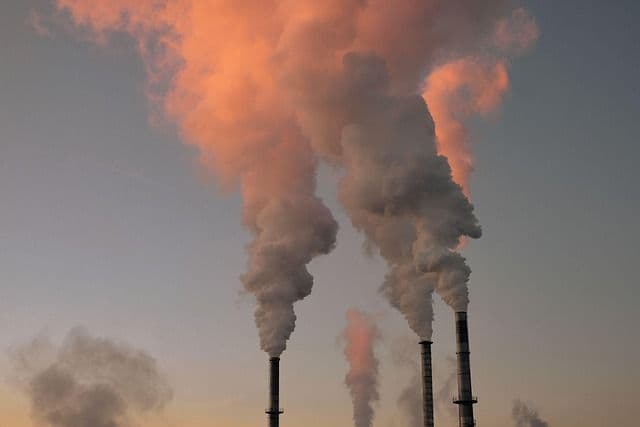
shogun/Pixabay




What Happened
What Happened
Where Left Sources Focus
- Global Health Emergency Declaration: Progressive outlets emphasize the Lancet Countdown authors' urgent call to formally recognize climate change as a global health emergency, arguing that health must be central to all climate policy decisions as health harms accelerate faster than global responses, citing Professor Marina Romanello and UN warnings.
- Quantifying Climate Health Impacts: Left-leaning coverage details the accelerating human and economic toll of warming, highlighting 710,000 heat-related deaths in 2023 and over $1 trillion in lost economic productivity in 2025, with researchers noting that 68% of these heat fatalities are directly attributable to climate change.
Where Right Sources Focus
- Data Transparency and Geopolitical Challenges: Right-leaning sources highlight methodological challenges in the Lancet report, noting that US authorities have failed to make certain fossil fuel subsidy data public, while also emphasizing that global geopolitical instability has pushed climate concerns into the background of international policy discussions.
- Global Economic Impact Disparities: Reports in right-leaning outlets emphasize the uneven global distribution of climate impacts and research funding, noting that Southeast Asia and Africa face the highest GDP losses while 84% of climate-related medical research funding remains concentrated in wealthy nations.
What's Largely Absent from Each Side
- Left sources rarely mention: Left-leaning sources rarely mention specific methodological hurdles cited by researchers, such as the US government's failure to disclose fossil fuel subsidy data, which right-leaning outlets feature to highlight limitations in global climate tracking and reporting completeness.
- Right sources rarely mention: Right-leaning coverage largely omits granular data on environmental indicators like shifting groundwater storage and extreme rainfall frequency, which left-leaning outlets use to provide concrete physical evidence supporting the Lancet report's call for an emergency declaration.
Rare Agreement
- Converging Climate Report Findings: Despite divergent coverage patterns, sources across the ideological spectrum agree that the Lancet report calls for a global health emergency declaration, while acknowledging that fossil fuels still provide 80% of world energy despite record-breaking clean energy investments in 2025.
Timeline
October 28, 2026
2026 data complications noted: Researchers reported in 2026 that their work was hindered for the first time by disappearance of certain data sources—notably US fossil fuel subsidy figures that were not publicly released—complicating climate‑health monitoring.
October 28, 2026
Lancet calls health emergency: The multi‑institution Lancet Countdown report, prepared by over 140 experts, called for climate change to be formally recognised as a "global health emergency" and urged that health be central to all climate decisions and coordinated global responses by WHO and others.
December 31, 2025
Energy transition progress and limits: Investment in clean energy reached a record US$2.1 trillion in 2025 and reduced air pollution avoided roughly 323,000 deaths in at least 77 countries, but fossil fuels still supply over 80% of global energy and top oil and gas producers are on course to exceed 1.5°C-compatible limits by 150% by 2040.
Summary by Ground AI
Sources
See All 173A varied selection of sources chosen by Ground to reflect the diversity of this story’s coverage.
Most Written About
The stories getting the most coverage from the last 24 hours







Timeline
October 28, 2026
2026 data complications noted: Researchers reported in 2026 that their work was hindered for the first time by disappearance of certain data sources—notably US fossil fuel subsidy figures that were not publicly released—complicating climate‑health monitoring.
October 28, 2026
Lancet calls health emergency: The multi‑institution Lancet Countdown report, prepared by over 140 experts, called for climate change to be formally recognised as a "global health emergency" and urged that health be central to all climate decisions and coordinated global responses by WHO and others.
December 31, 2025
Energy transition progress and limits: Investment in clean energy reached a record US$2.1 trillion in 2025 and reduced air pollution avoided roughly 323,000 deaths in at least 77 countries, but fossil fuels still supply over 80% of global energy and top oil and gas producers are on course to exceed 1.5°C-compatible limits by 150% by 2040.


