Court Clears Orange Order Garvaghy Road March, Protesters Block Route
Portadown, UK
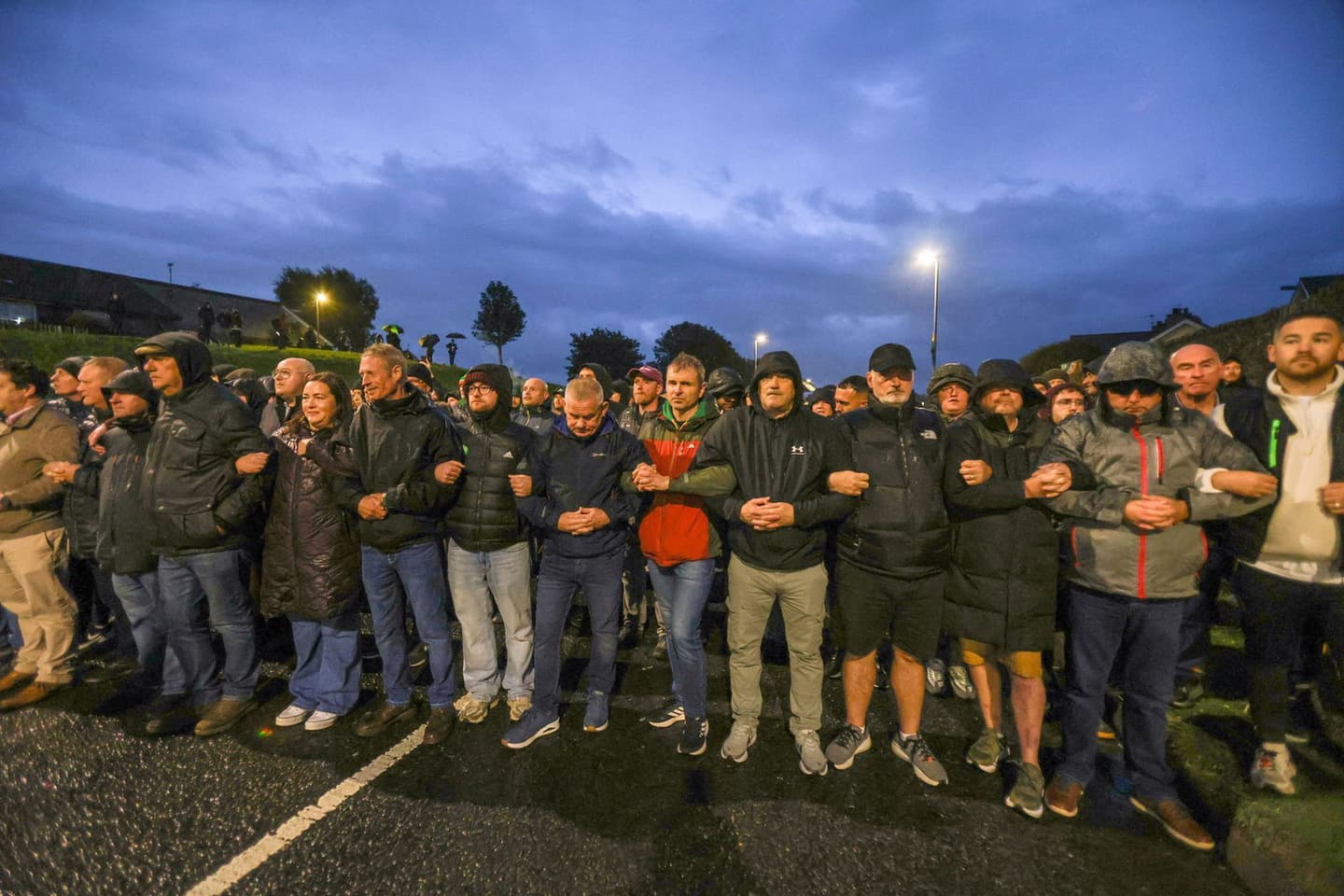
Paul Faith / AFP via Getty Images/Getty




What Happened
Key Implications
What Happened
Key Implications
Where Sources Agree
- arrows_inputCourt Authorizes Parade: Several outlets confirm the Court of Appeal overturned a High Court injunction in the early hours of Sunday, legally authorizing the Orange Order to proceed with a restricted 8am march along the Garvaghy Road, according to court documents.
- arrows_inputProtest Blocks March Route: Various reports document that approximately 2,000 protesters gathered on Garvaghy Road on Sunday to block a controversial Orange Order march; police subsequently issued warnings that the demonstration was unlicensed and participants were liable for arrest, per police notifications and news agency reporting.
Where Sources Disagree
- arrows_outputProtest Participation and Legality: Democratic Unionist Party leaders argue that Sinn Féin officials are breaking the law by participating in the Garvaghy Road protest, asserting that elected representatives must uphold court-sanctioned parades. In contrast, Sinn Féin leaders maintain that residents have a fundamental right to protest against what they describe as an unwanted sectarian march.
- arrows_outputMarch Framing Dispute: Supporters of the Orange Order march argue that a silent, restricted procession presents no threat to the community. In contrast, nationalist residents and leaders characterize the event as a provocative, sectarian display that reopens past traumas.
- arrows_outputParades Commission Assessment Basis: The Parades Commission maintains that its determination was based on a reasoned assessment of evidence. In contrast, legal representatives for Garvaghy Road residents argue that the assessment was flawed, claiming the police evidence provided was entirely directed to past risk rather than evaluating future threats of disorder.
Timeline
September 27, 2026
Protesters block road; police clash: On September 27, 2026 thousands of protesters gathered and blocked the Garvaghy Road in heavy rain, delaying the scheduled 8am parade start; police, supported by mutual aid officers, engaged the crowd and fired plastic bullets after being pelted with fireworks and stones at steel gates where about 5,000 people had gathered. The blockade and clashes marked a volatile response to the late court rulings and the Commission's limited approval.
September 27, 2026
Late-night court battles resolve: A sequence of emergency hearings over Saturday night saw a Saturday injunction blocking the commission decision (Justice Patricia Smyth) overturned at a Court of Appeal/High Court sitting that concluded in the early hours of Sunday, with the final hearing ending at 2:15am and upholding the Commission's determination. Courts cited legal thresholds for intervening in public-body decisions while noting the unusual timing and tensions.
September 25, 2026
Commission issues limited approval: Following the quashing, the Parades Commission issued a new determination permitting a tightly controlled return of part of the Drumcree route: no more than 35 participants, departure from Drumcree Church by 8am and dispersal at Carleton Street Orange Hall by 9:30am, with bans on bands, supporters and additional banners. The decision was framed as a narrow, one-off balance between assembly rights and residents' concerns.
Perspectives and Debates
Does the authorized march represent a dangerous sectarian provocation or a lawful, contained event?
Summary by Ground AI
Sources
See All 248A varied selection of sources chosen by Ground to reflect the diversity of this story’s coverage.
Most Written About
The stories getting the most coverage from the last 24 hours







Timeline
September 27, 2026
Protesters block road; police clash: On September 27, 2026 thousands of protesters gathered and blocked the Garvaghy Road in heavy rain, delaying the scheduled 8am parade start; police, supported by mutual aid officers, engaged the crowd and fired plastic bullets after being pelted with fireworks and stones at steel gates where about 5,000 people had gathered. The blockade and clashes marked a volatile response to the late court rulings and the Commission's limited approval.
September 27, 2026
Late-night court battles resolve: A sequence of emergency hearings over Saturday night saw a Saturday injunction blocking the commission decision (Justice Patricia Smyth) overturned at a Court of Appeal/High Court sitting that concluded in the early hours of Sunday, with the final hearing ending at 2:15am and upholding the Commission's determination. Courts cited legal thresholds for intervening in public-body decisions while noting the unusual timing and tensions.
September 25, 2026
Commission issues limited approval: Following the quashing, the Parades Commission issued a new determination permitting a tightly controlled return of part of the Drumcree route: no more than 35 participants, departure from Drumcree Church by 8am and dispersal at Carleton Street Orange Hall by 9:30am, with bans on bands, supporters and additional banners. The decision was framed as a narrow, one-off balance between assembly rights and residents' concerns.


