The Iran war’s toxic impact on one of the planet’s most unique seas
- On Thursday, the United Arab Emirates Ministry of Climate Change and Environment announced a tanker oil spill closed beaches in the Emirate of Umm Al Quwain, though authorities are working to contain environmental impacts with the link to Iranian attacks remaining unconfirmed.
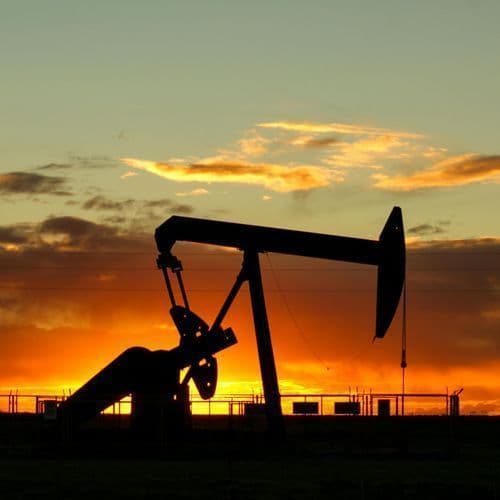
- The Persian Gulf is a shallow body of water covering 93,000 square miles with depths around 360 feet, limiting pollutant dispersion; satellite oceanographer Brian Barnes found twice the surface oil compared to periods without conflict.
- Six countries forming the Gulf Cooperation Council produce around a third of the world's desalinated water; Bahrain and Kuwait are almost entirely dependent on these facilities, making oil pollution a critical threat to regional water supply.
- Bernhard Riegl, a professor at Nova Southeastern University, warns the Gulf contains "some of the most valuable genetics of any sea on Earth," noting environmental damage could undermine scientific understanding of climate change adaptation.
- The conflict is shaping up to be another war with a toxic legacy reminiscent of the 1991 Gulf War, when retreating Iraqi forces set fire to oil wells in Kuwait, causing environmental catastrophes that remain difficult to remediate.
10 Articles
10 Articles


The Iran war’s toxic impact on one of the planet’s most unique seas
By Paula Hancocks, CNN Abu Dhabi (CNN) — The conflict in the Middle East is shaping up to be yet another US war with a toxic legacy.Bombs and missiles have released heavy metals and harmful chemicals into the atmosphere. US-Israeli and Iranian strikes have hit oil facilities, igniting fires that covered Tehran in thick black

A window beyond the aftermath of Iran's war is a battlefield, after military strikes have unleashed waves of pollution that threaten land, sea and air, and raise growing fears of a long-term environmental catastrophe...

The war in the Middle East is causing increasingly serious environmental damage. Attacks on tankers and oil infrastructure have led to oil spills in the Persian Gulf, and according to scientific studies, the scale of surface pollution is twice as high as in conditions without conflict.

The war in the Middle East is leaving behind a heavy environmental legacy. American, Israeli and Iranian strikes on oil facilities have caused fires and polluted the air with heavy metals and dangerous chemicals. Thick black smoke often hangs over Tehran, and rains contaminated with oil particles expose millions of people to potentially long-term health risks, writes CNN. The consequences also spread to the Persian Gulf, where attacks on ships a…
Coverage Details
Bias Distribution
- 100% of the sources are Center


Factuality
To view factuality data please Upgrade to Premium