Published • loading... • Updated
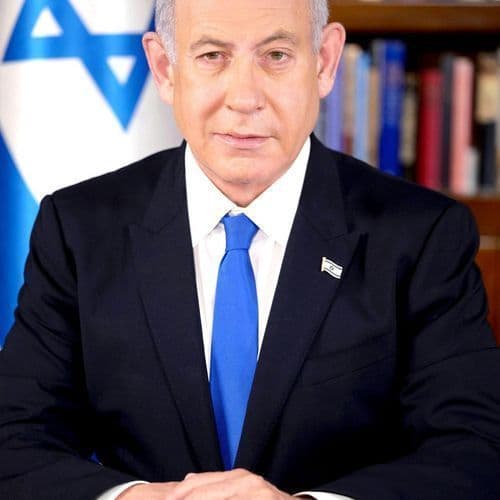
Netanyahu and Eisenkot Parties Resume Talks to Form Israel Govt
The four-hour talks in Herzliya, near Tel Aviv, ended unresolved: Eisenkot's bloc demands Netanyahu leave office, and Likud will not give up the premiership.
- On Saturday, Likud published a series of conditions for establishing a national unity government, despite Netanyahu having urged Eisenkot just a week earlier to enter negotiations "without preconditions."
- Negotiations begin with a fundamental disagreement unresolved: Eisenkot's bloc insists Netanyahu must leave the Prime Minister's Office, while Likud remains unwilling to surrender the premiership.
- Likud demands include "serious and in-depth negotiations" on national security and organized crime in the Arab community, alongside recognition of Israel as the nation-state of the Jewish people.
- Smotrich responded by urging the bloc to abandon fantasies of a minority government and instead "extend your hand" to form a broad national unity government.
- Eisenkot stated Saturday he has no intention of "dragging things out" and is prepared to establish an emergency government if broad coalition efforts fail.
Insights by Ground AI
51 Articles
51 Articles
 Jornal Expresso
Reposted by  Correio da Manhã
Eisenkot has until 6 December to form a government, after the legislative of the end of October that gave no absolute majority to either side. Deadline can be extended for 14 days
·Paço de Arcos, Portugal
Read Full Article
The parties of Benyamin Netanyahu and his rival Gadi Eisenkot launched new talks on Sunday
·Montreal, Canada
Read Full Article


"Marathon talks started on Sunday. By 6 December, the Jashar Chairman has time to form a government.
·Vienna, Austria
Read Full Article
The parties of interim Israeli Prime Minister Benjamin Netanyahu and his rival Gadi Eisenkot began a new round of talks on Sunday on a possible coalition government, with Netanyahu's party insisting on maintaining his core policies.
Coverage Details
Total News Sources51
Leaning Left7Leaning Right7Center7Last UpdatedBias Distribution34% Left, 33% Center, 33% Right
Bias Distribution
- 34% of the sources lean Left, 33% of the sources are Center, 33% of the sources lean Right
34% Left
L 34%
C 33%
R 33%


Factuality
To view factuality data please Upgrade to Premium