Exoplanets Can't Hide From The JWST's 'Digital Twin'
- Northwestern University researchers published a study Wednesday in the journal Nature detailing Physics-based Learning for Imaging Planets , a method that removes starlight glare to reveal hidden exoplanets in James Webb Space Telescope images.
- For 20 years, astronomers have subtracted reference star images to remove glare, but tiny telescope wobbles leave residual starlight that hides planets. FLIP solves this by creating a "digital twin" of the telescope to accurately model intrusive starlight.
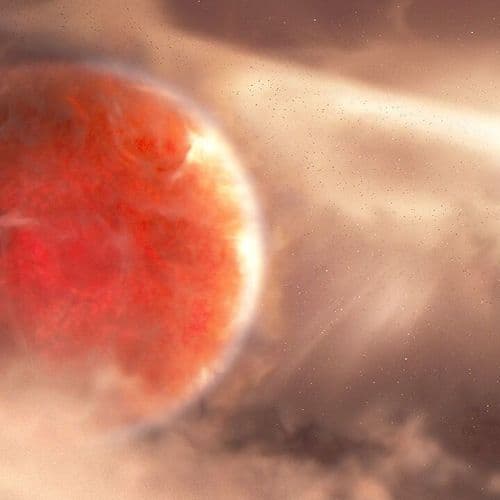
- In tests, FLIP improved sensitivity by up to 15 times, enabling researchers to image the giant planet 51 Eridani b at 4.3 micrometers infrared wavelength where conventional James Webb Space Telescope processing had previously failed to detect it.
- The study demonstrates substantially improved sensitivity on real coronagraphic imaging, with the framework potentially extendable to other Telescopes, thereby relaxing the unprecedented stability requirements currently needed for space-based observatories.
- Future discoveries using FLIP could reveal new types of planets, helping Scientists better understand how planetary systems evolve and ultimately how typical our own solar system is; the method may also shape next-generation Telescopes for exoplanet searches.
16 Articles
16 Articles


A giant planet has been hidden in James Webb's images for two years, although the telescope has already detected it. Then, scientists rediscovered the images in a different way, discovering what the traditional methods had previously failed to detect.

Exoplanets Can't Hide From The JWST's 'Digital Twin'
Finding dim exoplanets hidden in the glare of their stars is an ongoing challenge in astronomy. Telescopes use coronagraphs to block out starlight, but even they have their limitations. Researchers have developed a new technique with the JWST that can find dim exoplanets more easily than ever.

Northwestern astrophysicists develop method for detecting distant planets in space telescope images
A team of astrophysicists from Northwestern University has developed a new method to cut through the bright glare of starlight that blocks some distant planets from the view of NASA's James Webb Space Telescope.

Boffins use machine-learning tricks to create a starlight dimmer switch
Scientists have developed a way to remove starlight from telescope images that improved sensitivity to faint exoplanets by up to 15 times in tests on James Webb Space Telescope data.A team led by Northwestern University's Rodrigo Ferrer-Chavez combined a physics-based telescope model with optimization techniques used in machine learning to subtract unwanted starlight.Directly imaging exoplanets remains difficult because their host stars' glare c…

The detection of exoplanets is a complex process, as the light of their host stars often conceals its brightness. However, a new method is up to fifteen times more sensitive than traditional ones to obtain direct images of these bodies beyond the Solar System. The new computational technique 'passes' the glare of the stars to reveal the existence of planets that were hidden from view, according to a study led by Northwestern University (USA) pub…
Coverage Details
Bias Distribution
- 87% of the sources are Center


Factuality
To view factuality data please Upgrade to Premium