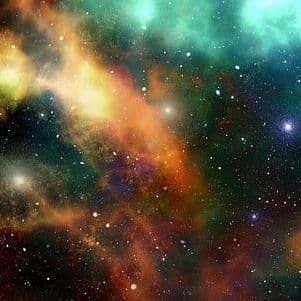
Black holes keep tearing these stars apart, but they survive
4 Articles
4 Articles

Some stars repeatedly skim past supermassive black holes, lose material and survive; scientists now think their unusually rapid spin explains why each returning flare becomes progressively dimmer
Astronomers have made fascinating observations of stars that are caught in a gravitational dance with supermassive black holes. As these stars approach, they lose material in a series of light bursts that fade over time. New research indicates that the stars' rapid initial spin is key to this phenomenon, as it limits excessive rotation during subsequent encounters with the black holes.

Black holes keep tearing these stars apart, but they survive
Astronomers have found stars that repeatedly skim past supermassive black holes, surviving each encounter while producing a new burst of light. In some systems, those flares mysteriously fade with every return. Researchers now think the key may be stars that were already spinning extremely fast before being captured. That rapid rotation could explain both the fading flares and how the stars ended up in such extraordinarily tight black hole orbit…

New measurements suggest that the rapid rotation of stars orbiting black holes explains the fading light bursts.

When massive celestial bodies get too close to a black hole, this often means their end. But some survive the passing flight repeatedly, whereby the resulting glow steadily decreases. For a long time science lacked an explanation for this. read more on t3n.de
Coverage Details
Bias Distribution
- 50% of the sources are Center, 50% of the sources lean Right


Factuality
To view factuality data please Upgrade to Premium