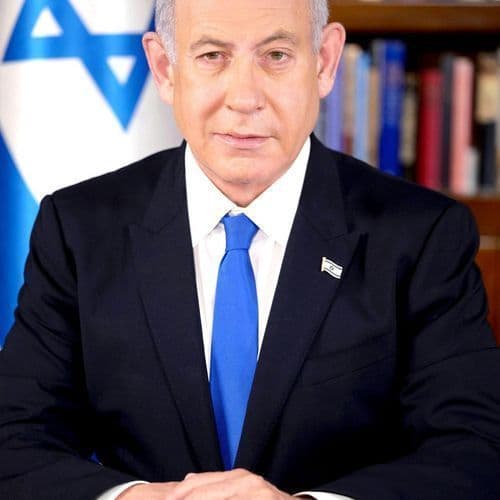
Netanyahu, Eisenkot Not Within Reach of Israel's Governing Majority
With 85% of votes counted, Netanyahu’s bloc led but still fell short of a majority, leaving Arab parties in a pivotal role.
- With 85 percent of votes counted from Tuesday's election, the pro-Netanyahu camp secured 53 seats while parties aligned with Gadi Eisenkot won 48 seats, leaving both blocs short of the 61 needed for a Knesset majority.
- Tuesday's election recorded the highest voter turnout in decades, serving as a judgment on Prime Minister Netanyahu's stewardship of the war in Gaza following the October 7, 2023, attacks and Israel's increasing international isolation.
- Arab parties won 19 seats, a "historic" high positioning them as decisive in coalition talks; the chairman of the Arab-majority Joint List said Wednesday the party is "ready and prepared to pave the way to oust the Netanyahu government."
- President Isaac Herzog called on all parties to approach coalition negotiations "with an open mind," though former editor Yaakov Katz told Newsweek a fresh vote is the "most probable scenario" if neither bloc secures 61 seats.
- The leader of the Democrats party told partners Wednesday there is an "opportunity to form a change government in partnership" with Arab parties, though analyst Rachel Nelson warned this strategy is "politically risky" and could trigger a quick vote of no confidence.
38 Articles
38 Articles

Israel election results: Netanyahu bloc holds lead with double envelopes to be counted overnight
Herzog says Israel ‘must do everything possible to avoid another round of elections,' • Golan calls on opposition bloc to form gov’t with Ra'am, Joint List after record-high Arab voter turnout

Benjamin Netanyahu can breathe in the parliamentary election: his camp is leading after counting about 85 percent of the votes. But for a majority in the Knesset he still lacks the necessary 61 seats. His challenger Gadi Eisenkot has not yet had his own majority.

In Israel, people have elected a new parliament, with 77.7 percent of the voter turnout being the highest in decades. According to partial results, Prime Minister Benjamin Netanyahu's government camp is ahead of his rival Gadi Eisenkot's opposition alliance – but it misses a majority in parliament.

Israel Faces Weeks of Political Wrangling
“Israeli Prime Minister Benjamin Netanyahu’s electoral coalition opened a sizable lead over Gadi Eisenkot’s opposition bloc with 85 percent of the vote counted,” Axios reports. “But while Netanyahu outperformed exit polls, which had Eisenkot’s opposition coalition ahead, neither bloc will clear a 61-seat majority. That sets the stage for weeks of wrangling over the country’s […]


Israel has elected, but none of the camps comes to a majority. Government formation is likely to be drawn. Until then Netanyahu remains in office - with far-reaching consequences for the Gaza Strip, the West Bank and the entire region. By J.-C. Kitzler.
Coverage Details
Bias Distribution
- 53% of the sources lean Right


Factuality
To view factuality data please Upgrade to Premium