Cassini Data Show Enceladus Ice Grains Sort Salts and Organics
Munich, Germany
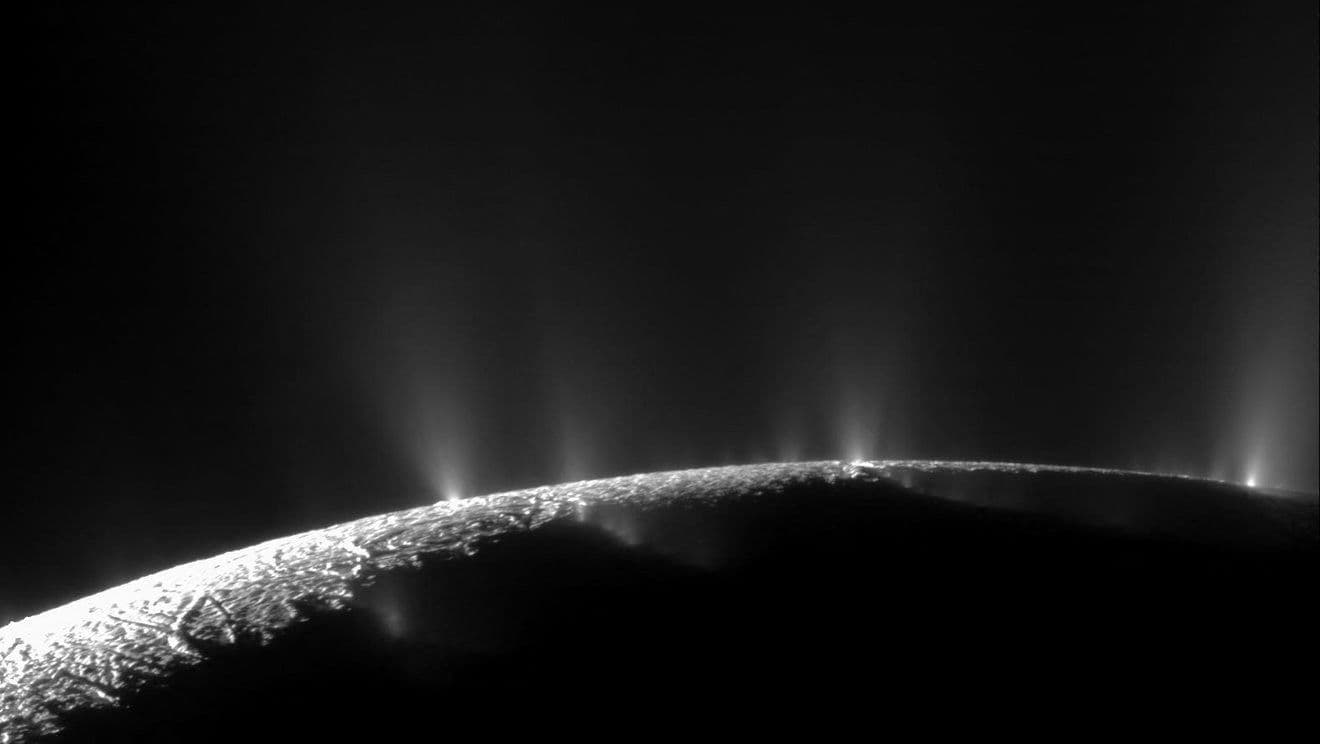
NASA/JPL-Caltech/Space Science I/Reuters
Source Analysis




What Happened
Key Implications
What Happened
Key Implications
Where Sources Agree
- arrows_inputCompositional Segregation of Ice Grains: Sources largely converge on the finding that the slow freezing of Enceladus's oceanic spray separates dissolved constituents into five distinct chemical subtypes of ice grains, according to Science Advances.
- arrows_inputMicrobial Habitability Potential: Most sources align on the finding that the microbe Methanothermococcus okinawensis can successfully adapt to Enceladus-like conditions, including high alkalinity and limited carbon dioxide, according to research published in Science Advances.
Where Sources Disagree
- arrows_outputExperimental Outcome Framing: While some researchers frame the experimental outcome as an unexpected surprise, broad scientific reporting characterizes the findings as a successful, definitive result in the search for extraterrestrial life.
Timeline
September 25, 2026
Implications For Life Detection: Taken with a companion study, the findings (published in Science Advances) suggest Enceladus concentrates oceanic constituents into individual ice particles and that recreated ocean chemistry can support methanogenic microbes, implying biosignatures could be identified in single plume particles; authors say this boosts prospects in the search for extraterrestrial life.
September 25, 2026
Lab Freezing Reproduces Segregation: Laboratory experiments freezing simulated Enceladus ocean droplets at controlled rates, together with thermodynamic modeling, showed phosphates, carbonates, and chlorides precipitate at markedly different temperatures and that slow freezing (below ~20 K/min) in tens-to-hundreds µm droplets causes salts to crystallize separately. These results explain the compositional segregation observed by Cassini's CDA.
September 25, 2026
Five Distinct Salt Subtypes: Instead of a uniform salty composition, the study identified at least five distinct chemical subtypes of ice grains dominated by sodium chloride, sodium carbonate/bicarbonate, sodium phosphate, sodium hydroxide, or potassium salts. Type 3 particles are a major compositional group representing frozen micrometer-sized aerosolized droplets from the subsurface ocean.
Summary by Ground AI
Sources
See All 48A varied selection of sources chosen by Ground to reflect the diversity of this story’s coverage.
Most Written About
The stories getting the most coverage from the last 24 hours




Source Analysis
Timeline
September 25, 2026
Implications For Life Detection: Taken with a companion study, the findings (published in Science Advances) suggest Enceladus concentrates oceanic constituents into individual ice particles and that recreated ocean chemistry can support methanogenic microbes, implying biosignatures could be identified in single plume particles; authors say this boosts prospects in the search for extraterrestrial life.
September 25, 2026
Lab Freezing Reproduces Segregation: Laboratory experiments freezing simulated Enceladus ocean droplets at controlled rates, together with thermodynamic modeling, showed phosphates, carbonates, and chlorides precipitate at markedly different temperatures and that slow freezing (below ~20 K/min) in tens-to-hundreds µm droplets causes salts to crystallize separately. These results explain the compositional segregation observed by Cassini's CDA.
September 25, 2026
Five Distinct Salt Subtypes: Instead of a uniform salty composition, the study identified at least five distinct chemical subtypes of ice grains dominated by sodium chloride, sodium carbonate/bicarbonate, sodium phosphate, sodium hydroxide, or potassium salts. Type 3 particles are a major compositional group representing frozen micrometer-sized aerosolized droplets from the subsurface ocean.


