Afghanistan: Only Country Banning Girls From Secondary Education, UN Reports
Afghanistan
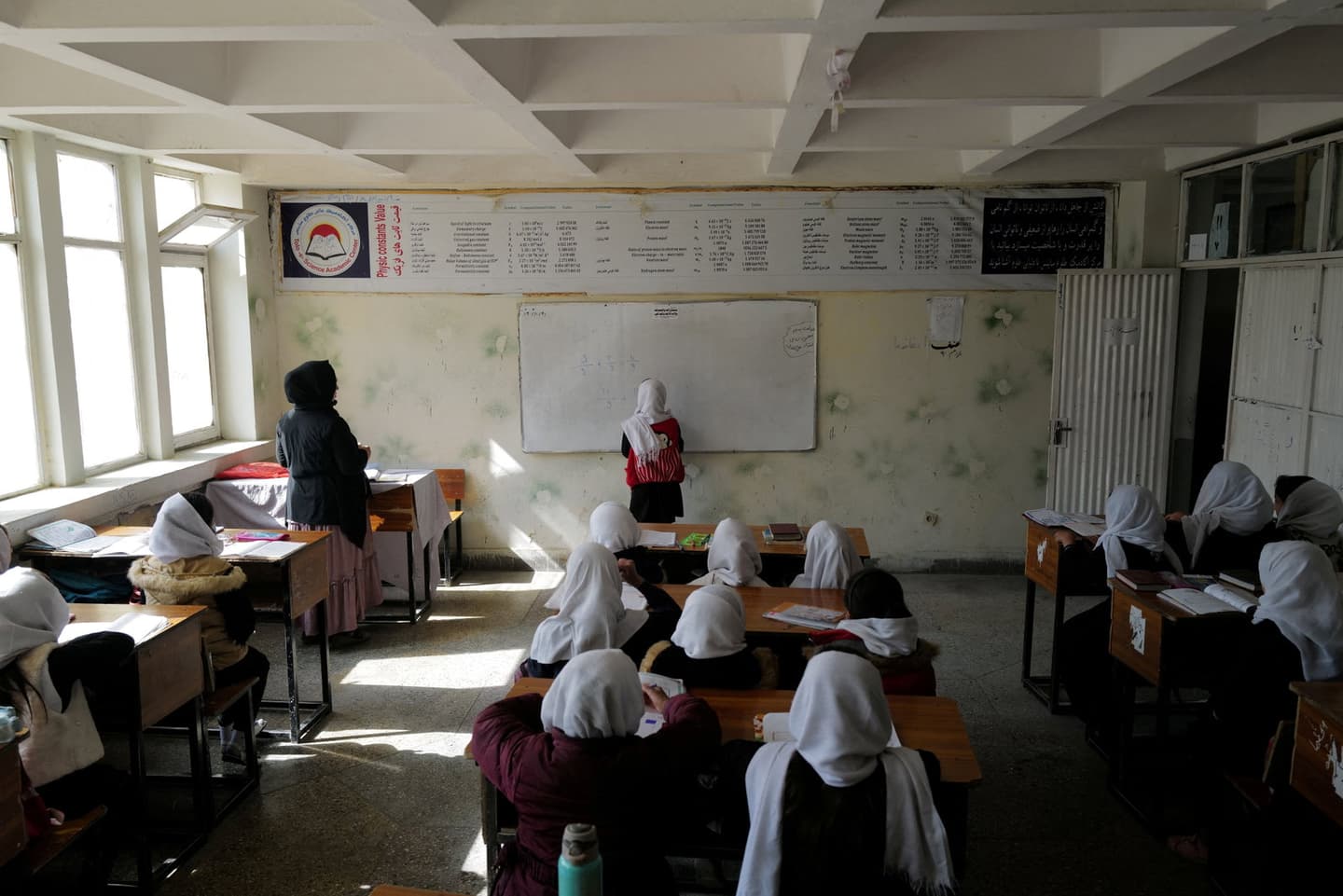
Zohra Bensemra/Reuters




What Happened
What Happened
Where Sources Agree
- arrows_inputTaliban Justification for Ban: All outlets cite the Taliban’s interpretation of Islamic law as the basis for prohibiting girls from secondary schools starting in March 2022 and universities later that year, according to Taliban authorities.
- arrows_inputScale of Educational Exclusion: Some outlets verify that approximately 2.4 million Afghan girls remain excluded from secondary education five years after the Taliban took control, according to UNESCO reports.
- arrows_inputSecret Education Efforts: Most coverage confirms that Afghan fathers are actively pursuing secret education for their daughters, with many families struggling to find private schooling or home-tutoring solutions to bypass the Taliban ban, according to interviews with Afghan fathers.
Where Sources Disagree
- arrows_outputEducation Restriction Estimates: Some sources estimate that at least one million girls are affected by education restrictions, while other reports place the number of those excluded from secondary education at 2.4 million.
- arrows_outputHuman-Interest vs. Institutional Framing: Coverage centers on the personal anguish of Afghan fathers striving to secretly educate their daughters. In contrast, other reporting prioritizes institutional assessments from the UN, highlighting the massive scale of exclusion, economic impacts, and international condemnation of the ban as a violation of fundamental rights.
Timeline
August 11, 2026
Human costs and education crisis: Reporting documents psychological distress among girls (depression, crying in private), parents' anguish and protests that have led to arrests, and broader education-sector collapse with low literacy rates and many primary‑age children out of school. Individual cases — such as girls at risk of failing final years — illustrate the personal toll of the bans.
August 11, 2026
UN/UNESCO detail scale and impact: By the August 11, 2026 reporting period U.N. agencies said millions of girls have been excluded — UNESCO and U.N. reports cite figures (including estimates of 2.4 million denied secondary education since 2021) and warn of long-term social and economic costs while urging immediate restoration of girls' educational rights. Community-based literacy and skills programs supported by UNESCO have been deployed as stopgap measures.
August 11, 2026
Families seek covert schooling: Fathers and families resorted to workarounds such as secret private schools (charging around 10,000 Afghanis or $153 a month), Quranic schools, home tutoring with salvaged textbooks, and attempts to send children abroad — options increasingly constrained by a sealed border and security risks. Photographs and interviews from 2026 document these clandestine and home-based efforts.
Summaries by Ground AI
Sources
See All 120Most Written About
The stories getting the most coverage from the last 24 hours


Timeline
August 11, 2026
Human costs and education crisis: Reporting documents psychological distress among girls (depression, crying in private), parents' anguish and protests that have led to arrests, and broader education-sector collapse with low literacy rates and many primary‑age children out of school. Individual cases — such as girls at risk of failing final years — illustrate the personal toll of the bans.
August 11, 2026
UN/UNESCO detail scale and impact: By the August 11, 2026 reporting period U.N. agencies said millions of girls have been excluded — UNESCO and U.N. reports cite figures (including estimates of 2.4 million denied secondary education since 2021) and warn of long-term social and economic costs while urging immediate restoration of girls' educational rights. Community-based literacy and skills programs supported by UNESCO have been deployed as stopgap measures.
August 11, 2026
Families seek covert schooling: Fathers and families resorted to workarounds such as secret private schools (charging around 10,000 Afghanis or $153 a month), Quranic schools, home tutoring with salvaged textbooks, and attempts to send children abroad — options increasingly constrained by a sealed border and security risks. Photographs and interviews from 2026 document these clandestine and home-based efforts.


