Scientists Report Cryovolcanic Activity on Interstellar Comet 3I/ATLAS
Chile
FES376
Source Analysis




What Happened
Why It Matters
What Happened
Why It Matters
Where Sources Agree
- arrows_inputInterstellar Comet Confirmed: Coverage documents that 3I/ATLAS is the third object confirmed to originate outside Earth's solar system, traveling at approximately 130,000 miles per hour, citing NASA.
- arrows_input3I/ATLAS Closest Approach: Initial reports confirm Comet 3I/ATLAS will make its closest approach to Earth on December 19, at approximately 167 million miles, with visibility possible via small telescope until spring 2026, according to NASA.
- arrows_inputComet Appearance Details: Outlets predominantly note that images captured by the Hubble Space Telescope and ESA's Juice mission show the comet with a glowing coma and two distinct tails; a plasma tail of charged gas and a faint dust tail of solid particles, according to NASA and European Space Agency.
Where Sources Disagree
- arrows_outputComet Imagery Clarity and Timing: Space agencies and some outlets describe Hubble as capturing "clearest-ever, stunning images" of the interstellar comet, providing new insights into its activity. However, other outlets report that space agency images are grainy or not detailed, noting that full Juice data is delayed until February 2026.
- arrows_output3I/ATLAS: Unique or Familiar?: Some researchers emphasize Comet 3I/ATLAS's unique composition and formation in distant solar systems. Conversely, other studies highlight its striking similarity to trans-Neptunian objects and carbonaceous chondrites.
Timeline
December 19, 2025
Closest Earth Approach Scheduled: 3I/ATLAS is due to make its closest approach to Earth on Dec. 19, 2025 at about 170 million miles (≈270 million km), and agencies state the object poses no threat to Earth.
November 30, 2025
Hubble Captures High‑Res Image: Hubble's Wide Field Camera 3 took a sharp image on Nov. 30, 2025 when the comet was ~178 million miles away, revealing a bright coma, tails and dust plumes and tightening nucleus size estimates to roughly 1,000 feet–3.5 miles.
November 24, 2025
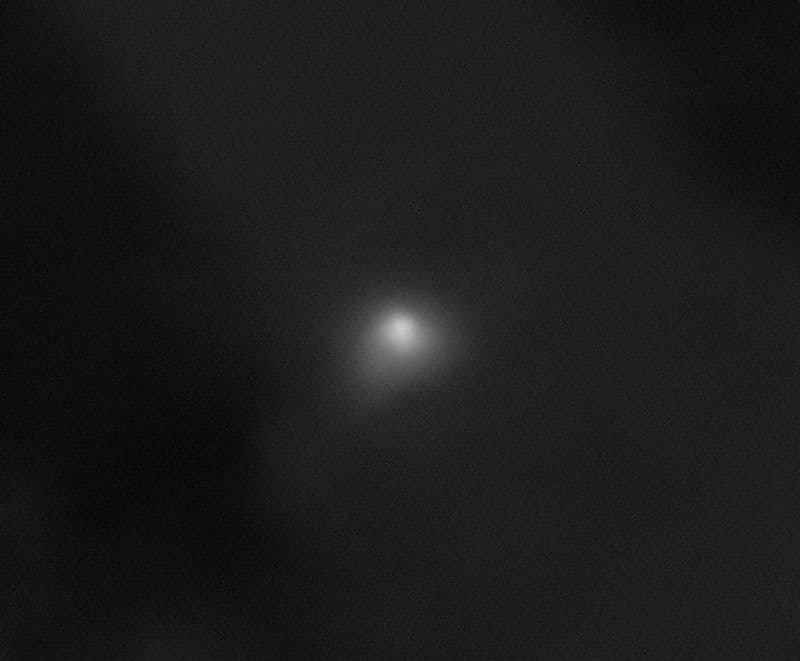
Preprint Reports Cryovolcanism: A paper posted to arXiv on Nov. 24, 2025 and high-resolution ground-based images (Joan Oró Telescope) reported jets and spiral structures interpreted as cryovolcano eruptions, proposing CO2 sublimation and internal reactions with metals as drivers.
Summary by Ground AI
Sources
See All 72A varied selection of sources chosen by Ground to reflect the diversity of this story’s coverage.
Most Written About
The stories getting the most coverage from the last 24 hours







Source Analysis
Timeline
December 19, 2025
Closest Earth Approach Scheduled: 3I/ATLAS is due to make its closest approach to Earth on Dec. 19, 2025 at about 170 million miles (≈270 million km), and agencies state the object poses no threat to Earth.
November 30, 2025
Hubble Captures High‑Res Image: Hubble's Wide Field Camera 3 took a sharp image on Nov. 30, 2025 when the comet was ~178 million miles away, revealing a bright coma, tails and dust plumes and tightening nucleus size estimates to roughly 1,000 feet–3.5 miles.
November 24, 2025
Preprint Reports Cryovolcanism: A paper posted to arXiv on Nov. 24, 2025 and high-resolution ground-based images (Joan Oró Telescope) reported jets and spiral structures interpreted as cryovolcano eruptions, proposing CO2 sublimation and internal reactions with metals as drivers.


