Germany Links Leipzig Airport Drone Plot to GRU Suspect
Leipzig, Germany
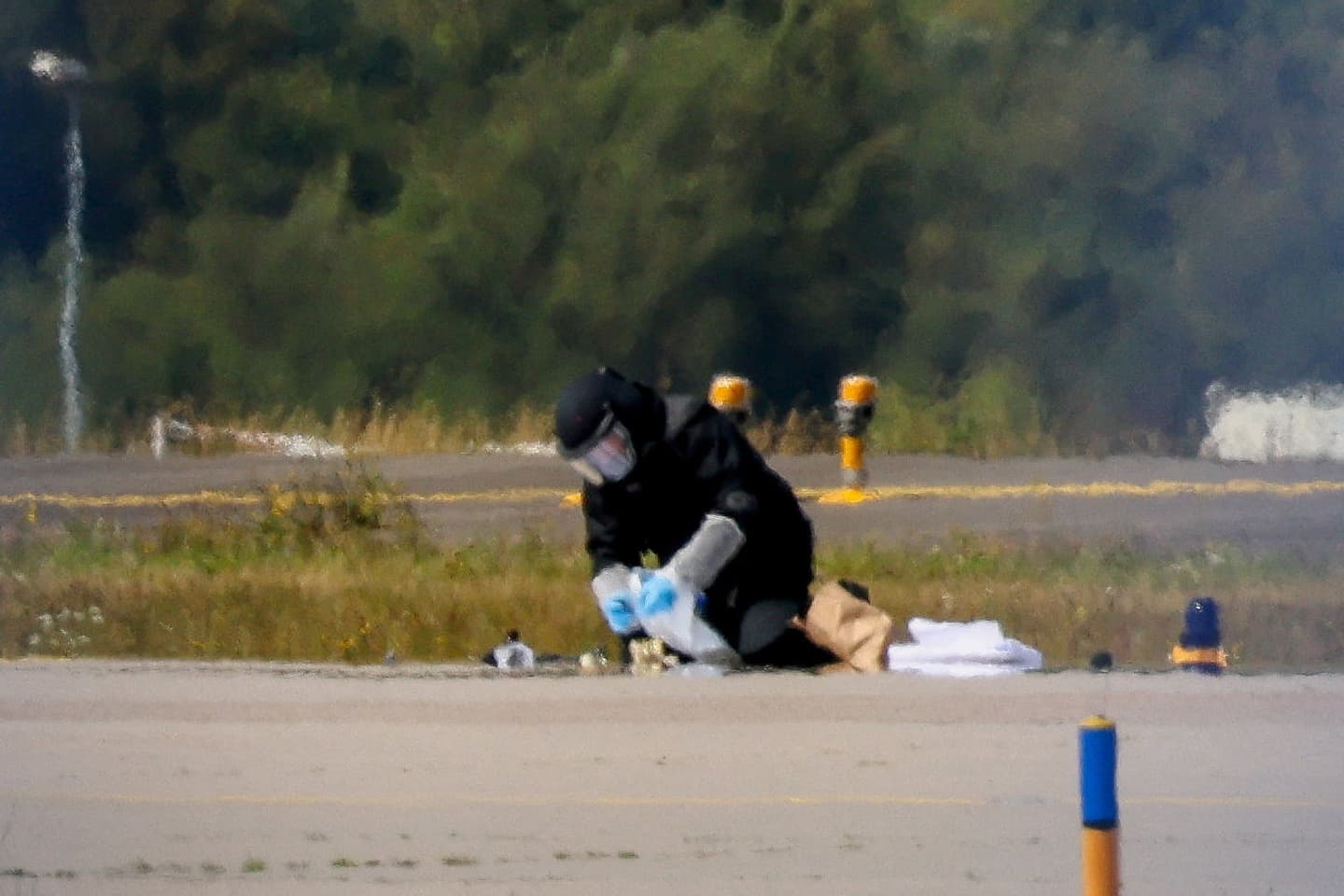
Axel Schmidt/Reuters




What Happened
What Happened
Where Sources Agree
- arrows_inputFailed Drone Attack Details: Sources uniformly report that the August 4 failed drone attack at Leipzig/Halle Airport involved 1.8 kilograms of Semtex; the device failed to detonate because a detonator wire snapped, sparing a nearby Antonov cargo plane carrying 25,000 liters of jet fuel, according to investigative files.
- arrows_inputIdentification of GRU-Linked Suspects: Coverage highlights the identification of two suspects, Russian national Oleg L. and Belarusian citizen Andrei K., as the primary operatives behind the Leipzig airport drone plot, with German security agencies linking Oleg L. to the GRU based on forensic DNA evidence and intelligence files.
- arrows_inputDiplomatic Reciprocal Measures: Coverage documents that Germany ordered the closure of the Russian consulate in Bonn and the departure of roughly 60 diplomats by September 18, prompting Russia to retaliate by closing the German consulate in St. Petersburg and all Goethe-Institutes, according to official government announcements.
Where Sources Disagree
- arrows_outputDNA Evidence Origin: Reports differ regarding the location of recovered DNA evidence linked to the suspects: some outlets state traces were found on a glove left near an antenna, while others report the DNA was recovered from the drone's remote control.
- arrows_outputSuspect's Criminal Links: Reports differ on the specific arson attacks linked to suspect Andrei K. While Polish prosecutors associate him with a hardware-store fire in Łódź, Welt am Sonntag indicates his DNA profile matches evidence recovered from a separate arson incident at a DHL logistics facility in Leipzig.
Timeline
September 18, 2026 Upcoming
Diplomatic fallout and countermeasures: In response to the attribution, Berlin announced measures including closing the Russian consulate general in Bonn (orders effective Sept. 18), terminating the operating agreement for the Russian House in Berlin and tighter entry controls for Russian nationals, while Moscow enacted reciprocal steps such as closing German consular presence and Goethe-Institut branches; Western allies condemned the incident as a major escalation in hybrid warfare.
September 12, 2026
Investigative files name two suspects: Reporting on September 12 disclosed confidential files identifying two suspects — Russian citizen Oleg L. (alleged GRU-linked logistics coordinator) and Belarusian Andrei K. (suspected operator) — and reported Oleg's travel via Türkiye and Berlin-Brandenburg Airport before leaving for Serbia and later returning to Russia. The files said German authorities had preliminary intelligence about Oleg's GRU ties when he entered the country but did not place him under surveillance.
September 1, 2026
Germany formally blames Russia: On September 1, the German government publicly attributed the attempted airport attack to Russian actors, citing police investigations, intelligence findings and forensic evidence pointing to a Russian-linked plot. Officials said drone configuration, explosives and trigger mechanisms matched those used in other Russian 'hybrid' operations.
Perspectives and Debates
Where does responsibility for the Leipzig drone incident primarily rest — with Russian intelligence or with German security oversight?
Summaries by Ground AI
Sources
See All 116Most Written About
The stories getting the most coverage from the last 24 hours








Timeline
September 18, 2026 Upcoming
Diplomatic fallout and countermeasures: In response to the attribution, Berlin announced measures including closing the Russian consulate general in Bonn (orders effective Sept. 18), terminating the operating agreement for the Russian House in Berlin and tighter entry controls for Russian nationals, while Moscow enacted reciprocal steps such as closing German consular presence and Goethe-Institut branches; Western allies condemned the incident as a major escalation in hybrid warfare.
September 12, 2026
Investigative files name two suspects: Reporting on September 12 disclosed confidential files identifying two suspects — Russian citizen Oleg L. (alleged GRU-linked logistics coordinator) and Belarusian Andrei K. (suspected operator) — and reported Oleg's travel via Türkiye and Berlin-Brandenburg Airport before leaving for Serbia and later returning to Russia. The files said German authorities had preliminary intelligence about Oleg's GRU ties when he entered the country but did not place him under surveillance.
September 1, 2026
Germany formally blames Russia: On September 1, the German government publicly attributed the attempted airport attack to Russian actors, citing police investigations, intelligence findings and forensic evidence pointing to a Russian-linked plot. Officials said drone configuration, explosives and trigger mechanisms matched those used in other Russian 'hybrid' operations.


