Cassini Data Show Enceladus Ice Grains Sort Salts and Organics
Munich, Germany
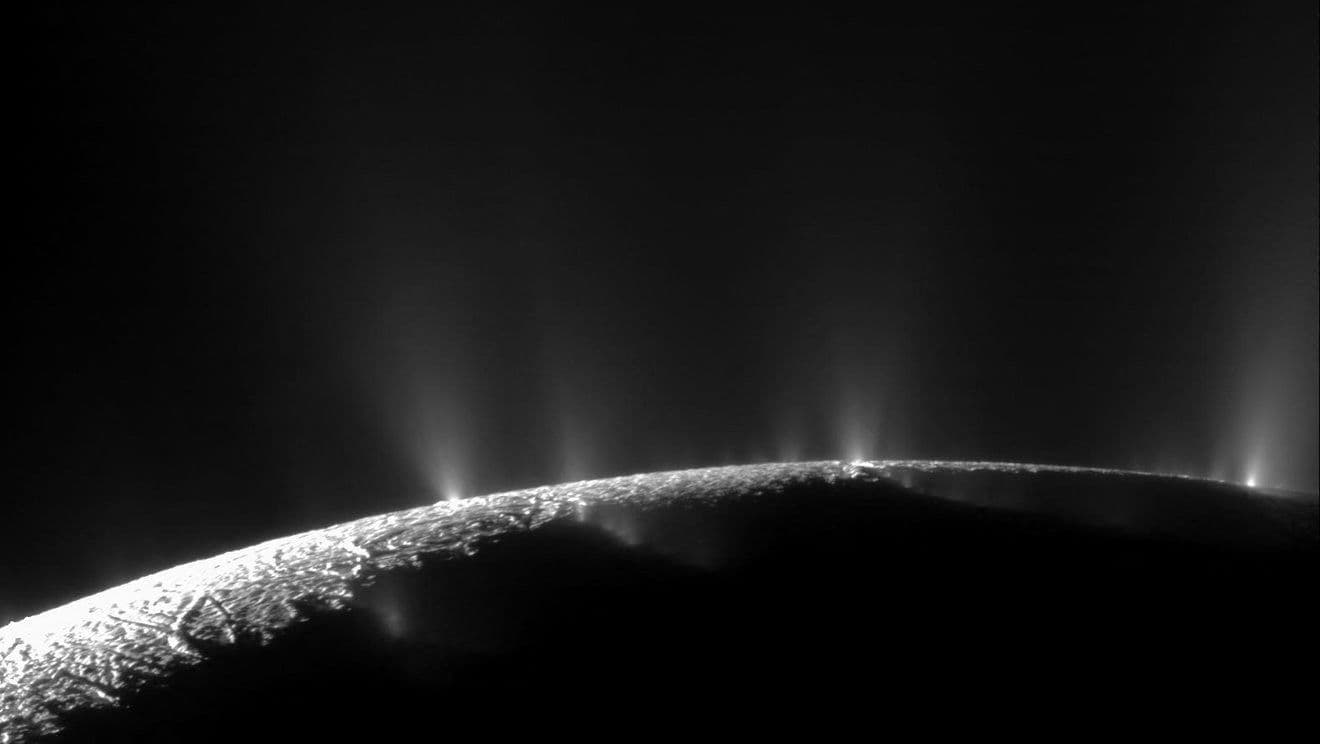
NASA/JPL-Caltech/Space Science I/Reuters
Source Analysis




What Happened
Key Implications
What Happened
Key Implications
Where Sources Agree
- arrows_inputEnceladus Ice Grain Segregation: Reporting predominantly indicates that the slow freezing of Enceladus's ocean spray causes salts and organic compounds to segregate into distinct, chemically diverse ice grains, according to an analysis of nearly 1,000 particles published in Science Advances.
- arrows_inputEnceladus Habitability Potential: Most reporting highlights the potential for methanogenesis on Enceladus as evidence of the moon's viability for microbial life, according to a Science Advances study.
Where Sources Disagree
- arrows_outputMicrobial Identification Specificity: Some reports specifically identify the microorganism Methanothermococcus okinawensis as the subject of habitability simulations. In contrast, other coverage refers broadly to Earth-like microbes without naming the specific species used to test the moon's environmental conditions.
- arrows_outputIce Crust Thickness Reporting: Reports vary slightly on the specific dimensions of Enceladus's icy shell, with some sources noting a thickness of roughly 22 miles at the equator, while others describe the crust generally without providing specific measurements.
- arrows_outputDroplet Ejection Speed: Reports vary slightly in their description of Enceladus's ice plumes; while some sources specify that frozen droplets accelerate to 1,000 km/h upon ejection, others describe the ejection process without including this numerical velocity.
Timeline
September 25, 2026
Publication and habitability tests: The two papers appeared in Science Advances on September 25, 2026; alongside the compositional study, a laboratory simulation of Enceladus-like chemistry showed a methane-producing microbe could grow under the simulated conditions, supporting implications for Enceladus' potential habitability.
September 25, 2026
Lab freezing explains segregation: Laboratory freezing of simulated Enceladus ocean droplets and thermodynamic modeling showed that slow freezing (below ~20 K per minute) in relatively large droplets (tens to hundreds of micrometers) and gradual freezing processes cause different salts to crystallize and segregate into separate ice particles.
September 25, 2026
Distinct chemical subtypes found: Rather than a uniform salty composition, the study identified at least five chemical subtypes of ice grains (dominated by NaCl, carbonates/bicarbonates, phosphates, NaOH, or potassium salts), indicating oceanic constituents become separated and concentrated into individual particles.
Summary by Ground AI
Sources
See All 49A varied selection of sources chosen by Ground to reflect the diversity of this story’s coverage.
Most Written About
The stories getting the most coverage from the last 24 hours




Source Analysis
Timeline
September 25, 2026
Publication and habitability tests: The two papers appeared in Science Advances on September 25, 2026; alongside the compositional study, a laboratory simulation of Enceladus-like chemistry showed a methane-producing microbe could grow under the simulated conditions, supporting implications for Enceladus' potential habitability.
September 25, 2026
Lab freezing explains segregation: Laboratory freezing of simulated Enceladus ocean droplets and thermodynamic modeling showed that slow freezing (below ~20 K per minute) in relatively large droplets (tens to hundreds of micrometers) and gradual freezing processes cause different salts to crystallize and segregate into separate ice particles.
September 25, 2026
Distinct chemical subtypes found: Rather than a uniform salty composition, the study identified at least five chemical subtypes of ice grains (dominated by NaCl, carbonates/bicarbonates, phosphates, NaOH, or potassium salts), indicating oceanic constituents become separated and concentrated into individual particles.


