Stellar collision may explain why Orion Nebula's planet-forming disks appear younger than its stars
Researchers say a triple-star merger could explain the nebula’s young-looking disks and a gas shell that began expanding only a few hundred thousand years ago.
7 Articles
7 Articles

A Merger Solves a Puzzling Paradox in Orion
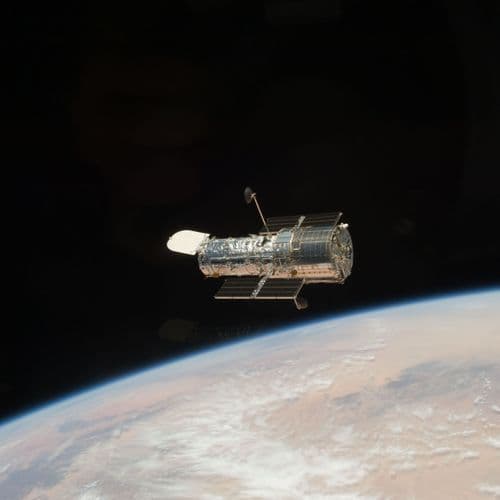
Some of the Hubble Space Telescope's earliest observations were of the Orion Nebula. Those images showed proplyds, and subsequent observations uncovered a paradox centered on them. Given their rate of mass loss, those disks should have been destroyed long ago. Why weren't they?


Stellar collision may explain why Orion Nebula's planet-forming disks appear younger than its stars
The Orion Nebula is a large star-forming region visible to the naked eye. Some of the young stars in the nebula are surrounded by disks of gas and dust in which planets form. Radiation from the massive central star, 1 Ori C1 (Theta-1 Orionis C1), gradually strips material from these disks, giving them shapes that resemble tadpoles.

The collision of stars explains why protoplanetary disks in the Orion Nebula appear younger than the stars that surround them. The paradox of ...

The collision of stars explains why the protoplanetary disks in the Orion Nebula appear younger than the stars they surround.

Ancient star collision may explain a mystery in the Orion Nebula
A collision between two stars may explain why planet-forming disks in the Orion Nebula appear much younger than the stars they surround. Computer simulations suggest that a stellar merger could have changed the environment suddenly, rather than gradually. The research, involving astronomers at Leiden University, was published in Astronomy & Astrophysics. It addresses a longstanding […]
Coverage Details
Bias Distribution
- 67% of the sources are Center


Factuality
To view factuality data please Upgrade to Premium