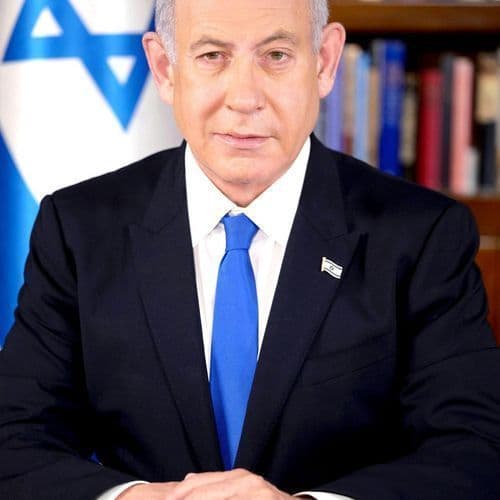
Netanyahu Set to Remain Caretaker PM After Election
Broadcasters projected 53 seats for Netanyahu's bloc, while Arab Israeli parties won a record 19 and markets fell more than 3%
- On Wednesday, Binyamin Netanyahu appeared set to remain Israel's caretaker prime minister after his right-wing bloc won 53 seats in the 120-seat Knesset, well ahead of Gadi Eisenkot's opposition with 48 seats.
- Turnout reached 77.7 per cent, the highest in two decades, while parties representing Arab Israelis won an unprecedented 19 seats, leaving Eisenkot without a realistic path to power since many Jewish political leaders reject Arab backing.
- Markets reacted negatively to the caretaker government prospect; Tel Aviv's key benchmark stock indexes fell more than 3 per cent. The result reflected a rightward shift among Israeli Jews, with nearly all Jewish parties now opposing an independent Palestinian state.
- Addressing supporters, Netanyahu urged the formation of a "strong, right-wing national government" and raised the prospect of renewed joint military action against Iran alongside US President Donald Trump, who claimed his endorsement "helped him a lot."
- Netanyahu would remain caretaker prime minister during coalition negotiations, potentially until another election next year. Regional tensions persist; Iranian citizen Abdollah Karimi warned of the "possibility of attack," while Egypt's Outhman Selim expressed frustration over the far-right shift.
27 Articles
27 Articles

Netanyahu becomes prediction markets’ favorite to be next Israeli PM
Benjamin Netanyahu is now oddsmakers’ favorite to stay on as Israel’s prime minister in its next government, which could take weeks or months to form, as the broader region braced for a period of prolonged uncertainty. Neither Netanyahu’s nor his main challenger’s bloc are poised to form a majority, but Israel’s ultimate political survivor retains broad powers to wage war against Iran, even in a caretaker capacity. A new government sans Netanyah…


Israel is facing a new political impasse, at a time when security, military conflicts and the confrontation with Iran remain at the forefront. The polls failed to produce a clear parliamentary majority, leaving open the possibility of prolonged negotiations, a national unity government or even new elections. In this uncertain scenario, Benjamin Netanyahu maintains the lead, despite the losses of his coalition, and remains caretaker prime ministe…

The opposition's "Babel"... a lifeline for Netanyahu - The 19 seats of the Arab parties change the arithmetic in the Knesset, but not the government - Herzog's appeal for government formation

Despite losing his parliamentary majority, Benjamin Netanyahu retains the reins of Israel as caretaker prime minister, taking advantage of the opposition's deadlock, the rightward shift in society and the war developments in the Middle East. The post Reuters: How Netanyahu managed to survive – Anatomy of the electoral battle in Israel appeared first on in.gr.

WHAT HAPPENS NOW? Netanyahu Could Remain Prime Minister For Months As Coalition Battle Begins
Israel could face months of political uncertainty following Tuesday’s Knesset elections, with neither Prime Minister Benjamin Netanyahu’s right-wing bloc nor the opposition currently securing the 61 seats needed to form a government. Although ballots are still being counted, attention is already shifting to the complicated process of forming Israel’s next coalition — a process that […]
Coverage Details
Bias Distribution
- 50% of the sources lean Right


Factuality
To view factuality data please Upgrade to Premium